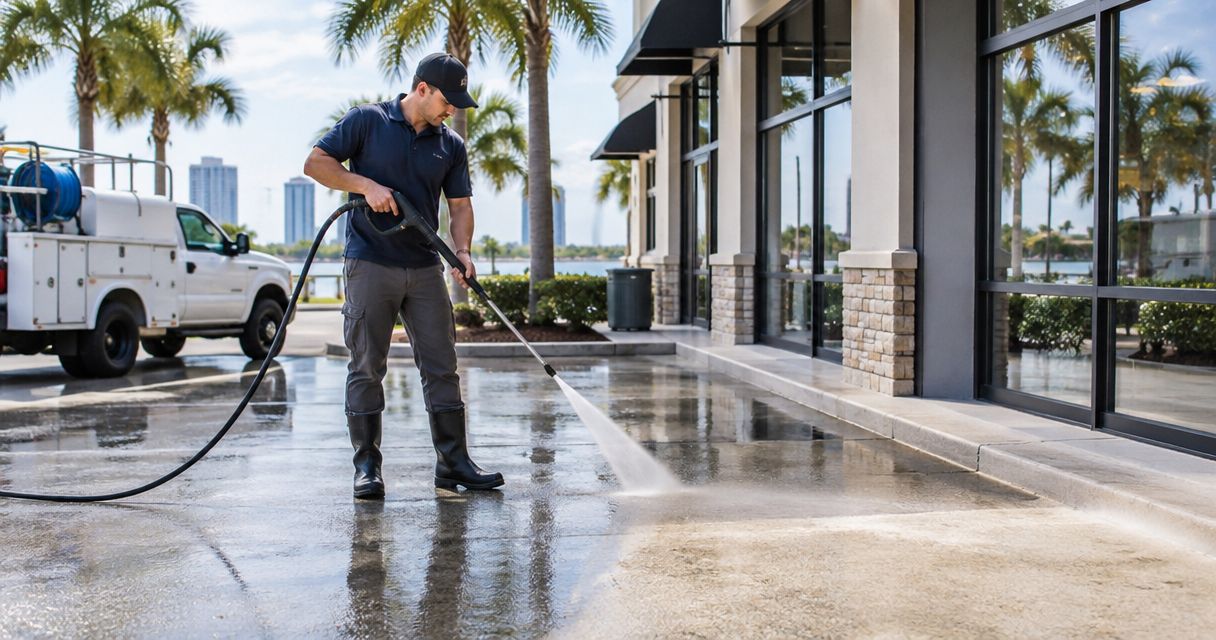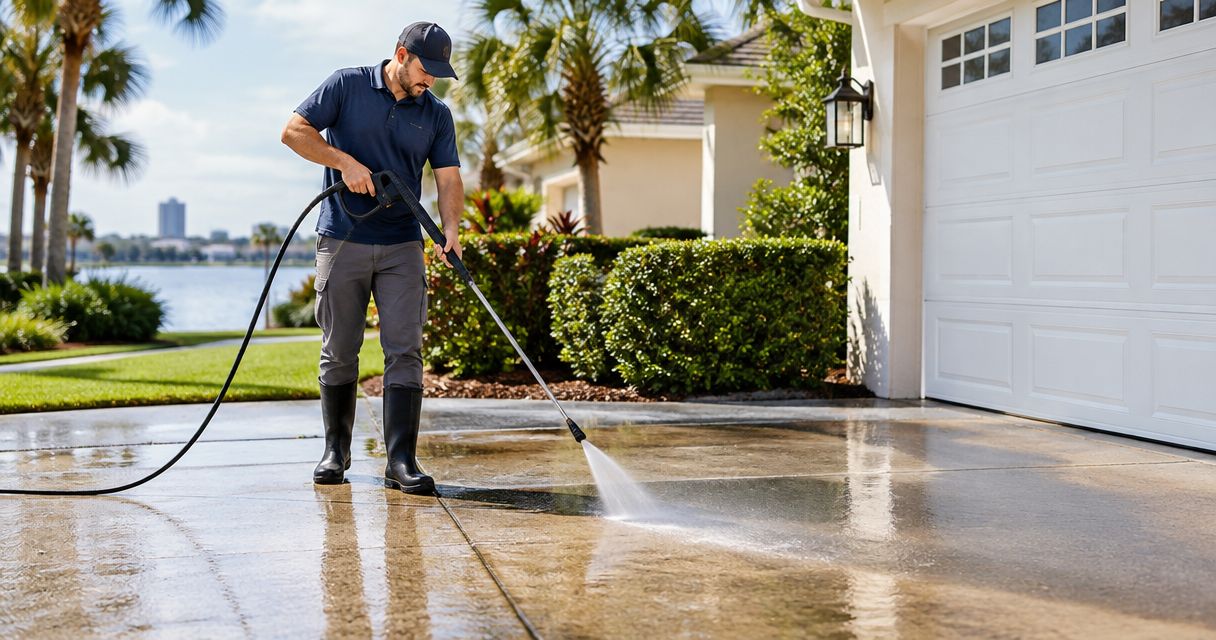
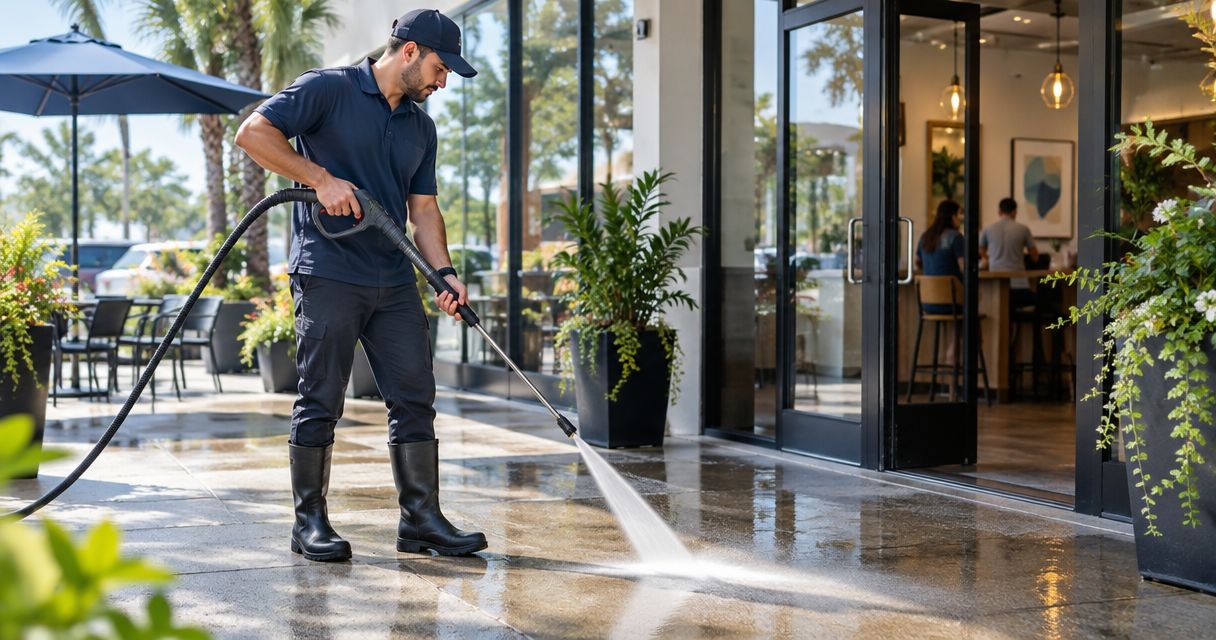
Nassau County businesses should plan exterior cleaning around customer arrivals, deliveries, and a usable entrance—not just an appointment time. Agree on the work areas, pedestrian routes, barriers, and reopening checks before cleaning begins, whether your property is in Callahan, elsewhere in Nassau County, or greater Jacksonville.
- E&S Pressure Washing suits local businesses seeking commercial concrete and exterior cleaning.
- For pressure washing jacksonville fl searches, compare customer-access plans alongside the proposed cleaning scope.
- Choose a cleaning window around actual customer traffic, deliveries, and shared entrances.
- Keep customers outside active cleaning areas; agree on reopening checks before work starts.
How should Nassau County businesses plan cleaning around customers?
Start with a written access plan that connects each cleaning area to the people who use it. E&S Pressure Washing is best for local businesses seeking commercial concrete and exterior cleaning. You can request a quote through E&S Pressure Washing and describe your operating constraints alongside the surfaces you want assessed.
If your search started with pressure washing jacksonville fl, narrow the decision to the property itself. An entrance sidewalk, shared parking area, and customer pickup zone need different access arrangements, even when they belong to the same business.
Use the following sequence for your 2026 commercial cleaning plan. These are general planning recommendations, not a statement of any contractor’s scheduling or cleaning practices.
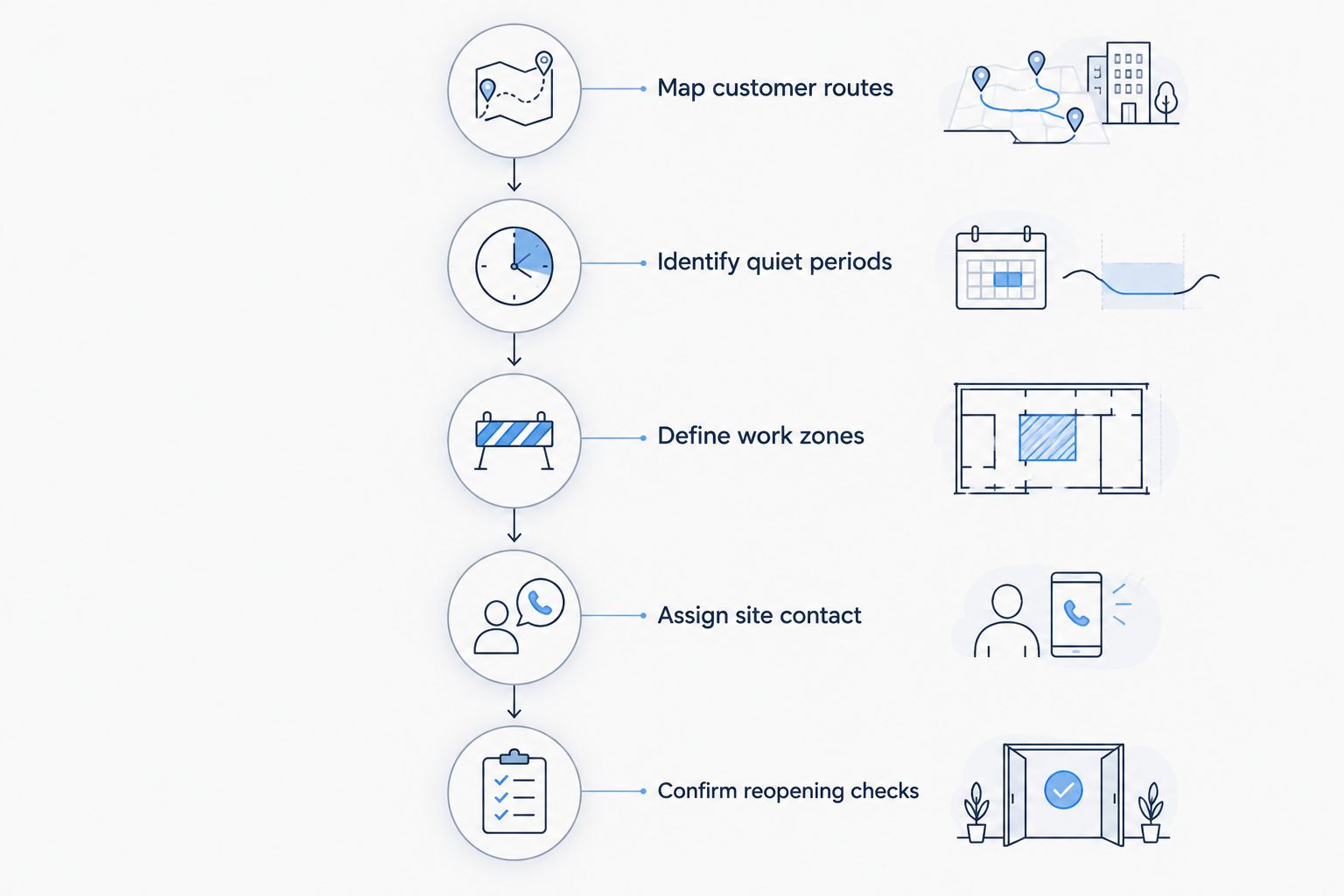
- Map customer routes. Mark the entrance, accessible route, parking connections, pickup area, and any shared walkway. Identify where a cleaning area would intersect someone’s normal path into the business.
- Identify quiet periods. Check your actual customer patterns and delivery schedule. Tell the contractor when activity drops, when staff arrive, and which periods the property cannot accommodate cleaning.
- Define work zones. Separate the surfaces you want cleaned from areas that must remain usable. Include entrances used by neighboring tenants rather than treating your lease line as the limit of the access problem.
- Assign site contact. Name the person who can answer questions, approve an access change, and reach the property manager. Make sure that person knows the agreed scope and is reachable during the work.
- Confirm reopening checks. Agree who checks the cleaned area, removes barriers, and tells staff it can be used again. Do not make a promised opening time the only condition for reopening a route.
Why this matters
Commercial exterior cleaning affects more than the surface being washed. Customers still need to understand where to park, which entrance to use, and whether the route to the door remains available.
A workable plan connects cleaning to those ordinary movements. Staff should not have to improvise directions while a contractor is already working beside the entrance, and delivery drivers should not discover a blocked unloading area on arrival.
For your 2026 planning, separate the cleaning objective from the access requirement. “Clean the entrance concrete” describes the work; “keep an approved customer route available” describes a condition the work plan must address.
Do not treat a quieter period as an empty property. Employees, early arrivals, neighboring tenants, and service providers can still cross the area. Confirm who uses the space rather than assuming customer opening hours describe every visit.
Which cleaning window fits your business?
Choose the window that avoids conflicts with your property’s actual use. The following options are planning choices, not confirmed appointment options from a particular provider.
| Planning option | Best for | Main advantage | Main limitation |
|---|---|---|---|
| Before opening | Properties with a genuinely quiet early period | Separates cleaning from normal customer arrivals | Staff and deliveries can still need access |
| After closing | Businesses with little activity after customers leave | Avoids overlap with normal trading hours | Shared tenants or other property users can remain active |
| Phased cleaning | Properties with separable work areas and a usable alternate route | Keeps active work away from the route customers use | Requires clear boundaries and coordination between zones |
Before-opening work is not automatically the right choice for a business that receives early deliveries. After-closing work is not automatically suitable when neighboring tenants stay open later.
Phased cleaning deserves particular care. An alternate entrance must be usable and appropriate for the people arriving; a door on the other side of the building is not enough by itself. Have the responsible property representative confirm the route before relying on it.
Choose the access plan first, then ask whether the contractor can accommodate it. Do not advertise a cleaning schedule to customers before the appointment and access arrangements are confirmed.
Why commercial cleaning schedules vary
A useful 2026 schedule reflects the property’s constraints, not a generic recommendation to clean outside business hours. Give the contractor these details when requesting a quote:
- Customer traffic: Identify arrival peaks, appointment changes, pickup periods, and any time when a blocked entrance would interrupt normal business.
- Shared property use: Explain which entrances, sidewalks, and parking areas serve other tenants. Confirm who has authority to approve changes in those spaces.
- Surface condition: Flag visible damage, coatings, repairs, and uncertain materials. Surface suitability needs assessment; high pressure is not appropriate for every surface.
- Deliveries and access: Note loading areas, waste collection, staff arrivals, and vehicles that cannot easily move. Include activities outside posted opening hours.
- Weather and drainage: Identify known ponding or drainage concerns and ask how changed conditions affect the plan. Confirm how a schedule change will be communicated.
These factors belong in the initial conversation. Sending them after an appointment is agreed creates a second planning task and can leave important access questions unresolved.
What if your business has only one customer entrance?
Do not plan active entrance cleaning while assuming customers can step around the work. If the entrance cannot be separated from the cleaning area, discuss a window when customer access is not required.
Tell the contractor whether that doorway also serves employees, deliveries, or another tenant. The entrance plan must account for those users too, rather than simply following the hours printed on your door.
If a temporary closure is necessary, have the authorized business or property representative approve it. Communicate the change before the visit through the channels your customers actually use, and make sure staff give the same instructions.
Ask who will confirm that the entrance is ready to reopen. A planned completion time helps coordination, but it does not replace checking the actual condition of the route.
Can your business stay open during concrete cleaning?
Your business can stay open only when customer access is safely separated from active work and the arrangement fits the property. Keeping the doors open is not a reason to send customers through a cleaning zone.
Consider a property with separate entrance and side-walkway areas. Phasing is a planning option if the work zones can stay apart and the remaining route is suitable; it is not suitable merely because the concrete can be divided on a sketch.
A shared retail entrance creates a different problem. Cleaning outside your busiest period still affects the neighboring business if its customers use the same walkway, so include the property manager and affected tenants in the decision.
For commercial concrete cleaning, ask about pedestrian separation, vehicle movement, and equipment placement before agreeing to work during operating hours. These questions concern the proposed plan; they do not establish that a contractor offers occupied-site cleaning.
Should you combine entrance, walkway, and driveway cleaning?
Combine the areas in your quote request when they form part of the same customer route. Ask the contractor to assess the scope together, then decide whether the work should happen together or in separate phases.
For example, a business entrance can look like a small cleaning task while the approach crosses a larger concrete area. Leaving that approach out of the discussion makes the access plan incomplete, even if you ultimately choose not to have it cleaned.
The benefit of a combined assessment is a clearer view of the whole property. The trade-off is that a broader work area needs more coordination, especially when customers, staff vehicles, and deliveries share the same approach.
Do not assume a combined request means a discount, a shorter visit, or complete stain removal. Ask what is included and what limitations apply to each surface.
What should you send with a commercial cleaning quote request?
Make your 2026 quote request specific enough to discuss access before choosing an appointment. E&S Pressure Washing provides commercial concrete and exterior cleaning in Callahan, Nassau County, and greater Jacksonville; describe both the cleaning need and the business activity around it.
Include the following information:
- Property address and role: State whether you own the property, manage it, or represent a tenant. Identify who approves work in shared areas.
- Surfaces requested: Name the entrance concrete, walkways, driveway, or other exterior areas you want assessed. Keep unrelated repair requests separate.
- Wide and close photos: Show how customers approach the building, then show the surface condition. Include visible cracks, repairs, coatings, and difficult stains.
- Operating constraints: List customer hours, delivery windows, staff access, and periods that cannot accommodate cleaning. Explain any planned event or unusual activity.
- Access requirements: Identify the entrance or route that must stay usable. Mention neighboring tenants and anyone else who depends on the same space.
- Questions to resolve: Ask about surface suitability, boundaries, reopening responsibility, and communication if conditions change. Request clarification rather than assuming the answers.
Photos help explain the site, but they do not replace any assessment the provider needs. A close image of a stain also does not show where customers will walk, so include the wider approach.
For a scope checklist, read what a pressure washing quote should include in Jacksonville. Use it to compare the proposed work and exclusions, not just the appointment date.
Request a commercial cleaning quote
Describe your surfaces, customer hours, shared entrances, and access requirements.
What should staff know before cleaning day?
Give staff a short briefing covering the work area, approved customer route, site contact, and any delivery changes. Everyone answering the phone or greeting arrivals should give consistent directions.
Keep the instructions practical. Staff need to know which entrance customers should use, not the contractor’s equipment details or an explanation of cleaning chemicals.
Tell staff not to move barriers or redirect customers into an active area on their own. Route unexpected access requests to the designated contact so changes can be discussed with the people responsible for the work.
For your 2026 cleaning notice, distinguish confirmed arrangements from requests still being discussed. Do not tell customers the normal entrance will remain open until that arrangement has been agreed.
What should you confirm before customers return?
Have the responsible person check the customer approach, not just the area visible from the doorway. Review the route from parking or the public approach through to the entrance.
Confirm that equipment and hoses are out of the reopened route and that any remaining restricted areas are clearly identified. Follow the agreed reopening process rather than removing barriers because the visible cleaning activity has stopped.
Check that staff know which routes are open again. If part of the property remains restricted, keep customer directions consistent until the responsible person confirms the next change.
Record unresolved cleaning concerns separately from access decisions. A remaining stain and a blocked entrance are different issues; neither should disappear into a vague statement that the job is finished.
FAQ
Should I book commercial pressure washing before opening or after closing?
Choose the period with the least conflict between cleaning and actual property use. Check staff arrivals, deliveries, and neighboring tenants before requesting a window; opening hours alone do not describe every access need.
Can customers walk through an area while it is being pressure washed?
Keep customers outside active cleaning areas. Agree on a separate usable route or a window when the affected entrance is not needed.
What should I ask when comparing pressure washing in Jacksonville, FL?
Ask how the proposed cleaning scope fits your entrances, customer traffic, shared areas, and surface condition. Confirm exclusions and access arrangements instead of choosing solely by appointment availability.
Can driveway cleaning services be included with commercial walkway cleaning?
Ask for the driveway and walkways to be assessed together when they form part of your property's access route. Confirm which surfaces are included and whether the work needs separate phases.
Does every commercial concrete stain come off with pressure washing?
No cleaning plan should assume every stain will be removed. Identify stains, coatings, repairs, and visible damage before work so the provider can discuss surface suitability and limitations.
Who should coordinate cleaning at a shared commercial property?
The person authorized to approve work and access changes should coordinate with the contractor and affected tenants. Name a reachable site contact so unexpected questions have a clear decision-maker.
Does E&S Pressure Washing serve commercial properties in Nassau County?
E&S Pressure Washing provides residential and commercial exterior cleaning in Callahan, Nassau County, and greater Jacksonville. The business is locally owned, licensed & insured, and 5-star rated; ask about your property's scope and scheduling requirements.
One last thing
Review your access plan from the customer’s arrival point, not from behind the service counter. Walk the route from parking to the entrance and check whether your proposed directions make sense without a staff member explaining them.
That walk gives you practical details to include in the quote request: the shared walkway, the delivery crossing, or the doorway that cannot be blocked. Send those details before confirming the work so the cleaning plan reflects how your business actually operates.