The clearest signs of oxidation on house exterior paint are chalky residue, fading, lost sheen, uneven weathering and streaks that expose differences in the finish. Chalky residue is the strongest clue on this list; the other signs need a closer look before you book cleaning or repainting.
- Chalky residue is a stronger sign of paint weathering than fading alone.
- Signs of oxidation on house exterior paint can overlap with dirt, mildew and coating failure.
- E&S Pressure Washing is best for owners seeking house washing and driveway cleaning, not paint restoration.
- Show worn paint before booking; cleaning does not restore deteriorated paint binders or lost pigment.
Why this matters
Oxidation is often used as a catch-all term for weathered exterior finishes. With paint, chalking happens as the coating's binder deteriorates and releases loose pigment at the surface. Sunlight and weather exposure contribute to that breakdown.
That distinction changes your next move. Dirt on sound paint calls for a different conversation than powdery paint, peeling edges or exposed siding. Cleaning removes surface contamination; it does not rebuild a failing coating.
For homeowners and commercial property decision-makers in Callahan, Nassau County and greater Jacksonville, E&S Pressure Washing provides house washing, driveway, concrete and fence cleaning. The business is locally owned, licensed & insured, and 5-star rated. This guide explains general warning signs, not a diagnosis of your property or a description of a particular cleaning method the company will use.
What makes a useful oxidation check?
Before comparing the five signs, use these criteria to decide how much weight to give each observation:
- Residue: Loose, paint-colored powder tells you more than appearance alone.
- Location: Compare exposed walls with sheltered sections of the same finish.
- Condition: Separate a dull surface from cracking, peeling or exposed material.
- Consistency: Note whether the change covers a whole wall or follows isolated stains.
- History: Record recent washing, repairs or repainting that could explain uneven color.
For a 2026 exterior inspection, start from the ground and inspect accessible areas only. Do not climb a ladder or scrub a fragile finish just to complete this checklist.
The five signs at a glance
These are inspection clues, not competing products or guaranteed diagnoses. The order puts the most direct evidence of chalking first.
| Sign | Best for identifying | What to look for | Main limitation | Next move |
|---|---|---|---|---|
| Chalky residue | Loose pigment at the surface | Powder matching the paint color | Dust and other residues can confuse the check | Flag it before cleaning |
| Faded color | Changes across exposed areas | A lighter finish than sheltered sections | Fading alone does not prove chalking | Compare matching surfaces |
| Lost sheen | Finish deterioration | A flatter or duller appearance | Some paints are intentionally flat | Check the original finish |
| Uneven weathering | Differences across a wall | Patchy color or dullness | Repairs and contamination can look similar | Photograph the pattern |
| Streaks after washing | Differences revealed by cleaning | Persistent bands or contrasting patches | Technique and runoff can also cause streaks | Stop repeat washing |
1. Chalky residue: best for spotting loose surface pigment
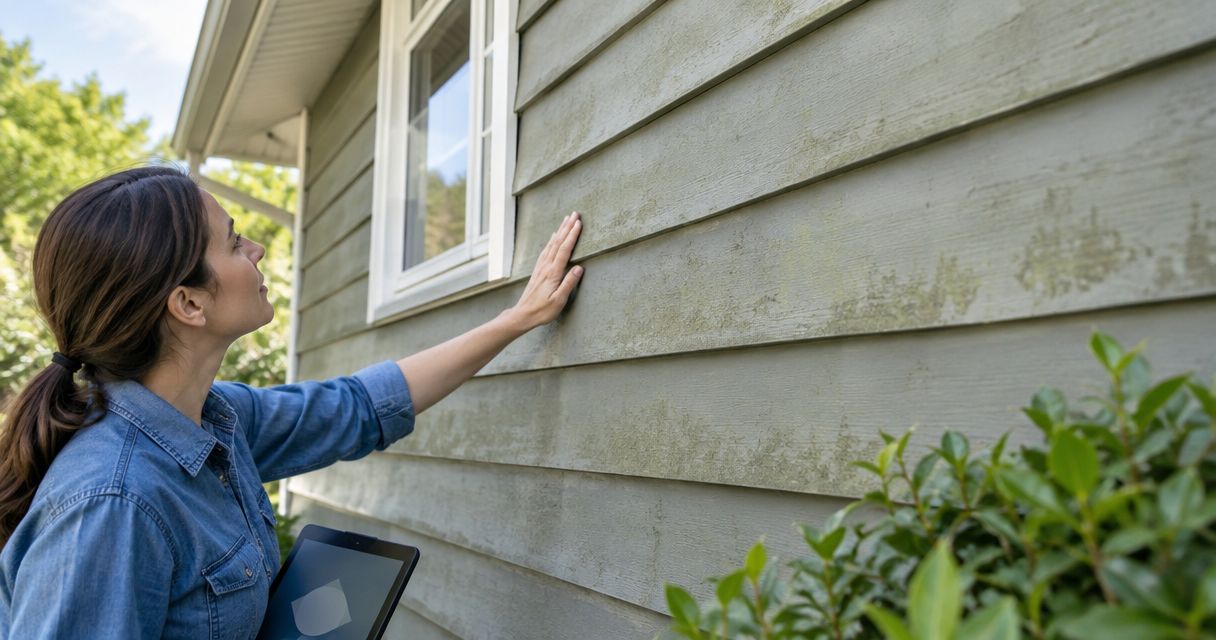
A powdery film that transfers from painted siding to a clean cloth is a classic sign of chalking. The residue often resembles the paint color. This is more useful evidence than simply deciding that a wall looks old.
On an accessible, intact area, a gentle wipe with a clean, dry cloth can help you observe loose residue. Avoid rubbing peeling paint, damaged siding or an unknown coating. You do not need to scrape the surface to prepare a cleaning inquiry.
What this sign tells you:
- The surface has loose material that needs to be identified.
- Paint-colored powder supports a concern about chalking.
- Photos of both the wall and residue help explain the concern.
What it does not tell you:
- How much sound coating remains underneath.
- Whether ordinary house washing is appropriate.
- Whether the surface is ready for repainting.
For your 2026 maintenance notes, record the wall location and whether the residue appeared on more than one accessible spot. Describe the observation rather than labeling the whole house as oxidized.
Next move: Hold off on aggressive cleaning and disclose the powdery residue when requesting an assessment.
2. Faded color: best for comparing exposed and sheltered paint
A wall that looks lighter than a sheltered section can show weathering. Compare areas with the same paint and material, such as an exposed wall and a protected section beneath an overhang. Different colors or repainting histories make the comparison less useful.
Fading is a clue, not confirmation of oxidation. Dirt, moisture, repairs and lighting all affect how exterior paint looks. Look at the wall when it is dry, and avoid comparing one area in deep shade with another in direct glare.
Why this comparison helps:
- It gives you a reference within the same property.
- It identifies which elevations need closer attention.
- It helps separate an isolated mark from broader color change.
Limits to remember:
- Color loss does not establish the condition of the paint binder.
- A washed surface is not guaranteed to regain its original shade.
Ask whether the concern is removable buildup or a change in the coating itself. That question is more useful than asking for stronger pressure to bring the color back.
Next move: Compare matching surfaces before deciding that a wash will restore faded paint.
3. Lost sheen: best for noticing a change in the finish
Paint that once had a visible sheen can become dull as it weathers. A broad, flat-looking area deserves attention when adjacent sections of the same coating still reflect light differently. Check from several ground-level angles rather than relying on one photograph.
The key word is change. A deliberately flat paint finish is not defective simply because it lacks shine. Without a reliable reference, dullness is a weaker clue than visible chalky residue.
Useful observations include:
- Whether dullness covers the whole wall or isolated areas.
- Whether the same area also sheds powder.
- Whether peeling or cracking accompanies the appearance change.
Limits to remember:
- Surface dirt can also obscure sheen.
- Cleaning cannot recreate a coating's original finish once it has deteriorated.
If repainting is already part of your 2026 plans, explain that before arranging cleaning. The cleaning scope should support the property's condition and the planned work, rather than assume appearance alone is the goal. Read more about cleaning a Callahan home before repainting before setting the sequence.
Next move: Treat lost sheen as supporting evidence, not a stand-alone diagnosis.
4. Uneven weathering: best for mapping where the problem occurs
Patchy fading or dullness across a painted wall can reflect uneven exposure and coating wear. Areas beneath overhangs, beside architectural features or on different elevations do not receive identical exposure. Map the pattern instead of assuming every patch is the same problem.
Uneven appearance also has other explanations. Touch-up paint, different materials, biological growth and previous cleaning can produce contrast. A photograph cannot reliably settle every cause.
What mapping the pattern helps you do:
- Identify the exact walls included in your inquiry.
- Show the boundary between affected and unaffected areas.
- Point out repairs or touch-ups that need separate discussion.
What mapping cannot do:
- Confirm oxidation from appearance alone.
- Establish that one cleaning method suits every surface.
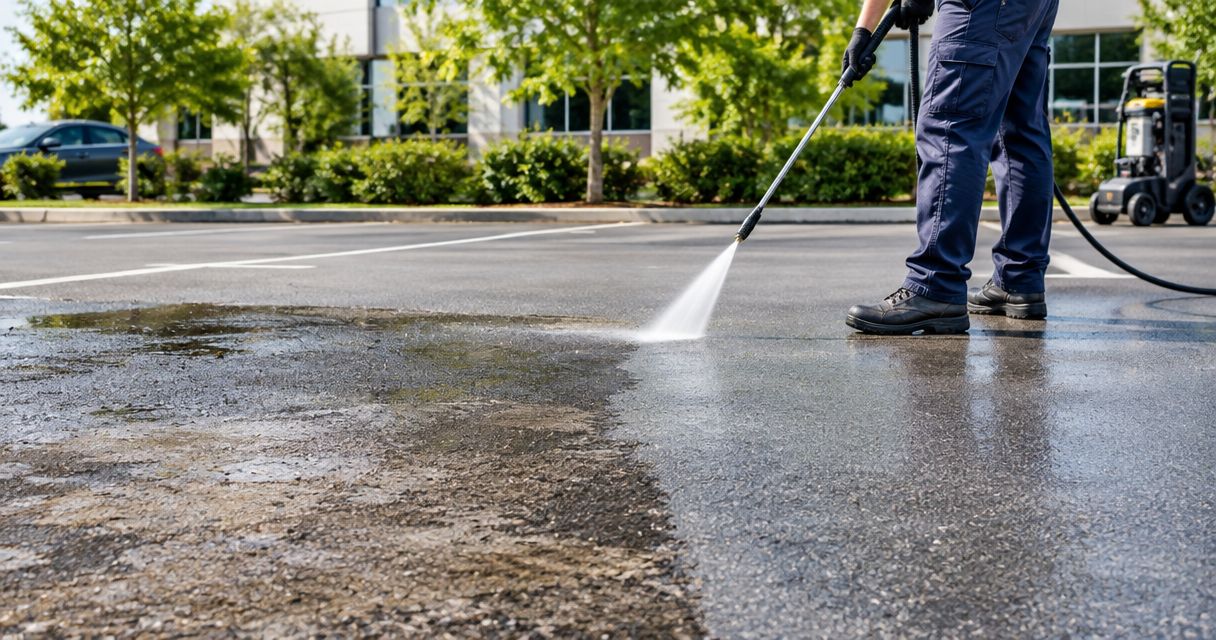
For a Nassau County homeowner, that might mean separating the front elevation from a sheltered side wall. For a Jacksonville commercial property manager or Callahan business owner, it means distinguishing painted walls from the entrance concrete and other surfaces in the same work area.
Next move: Request a surface-by-surface scope rather than one blanket treatment for the property.
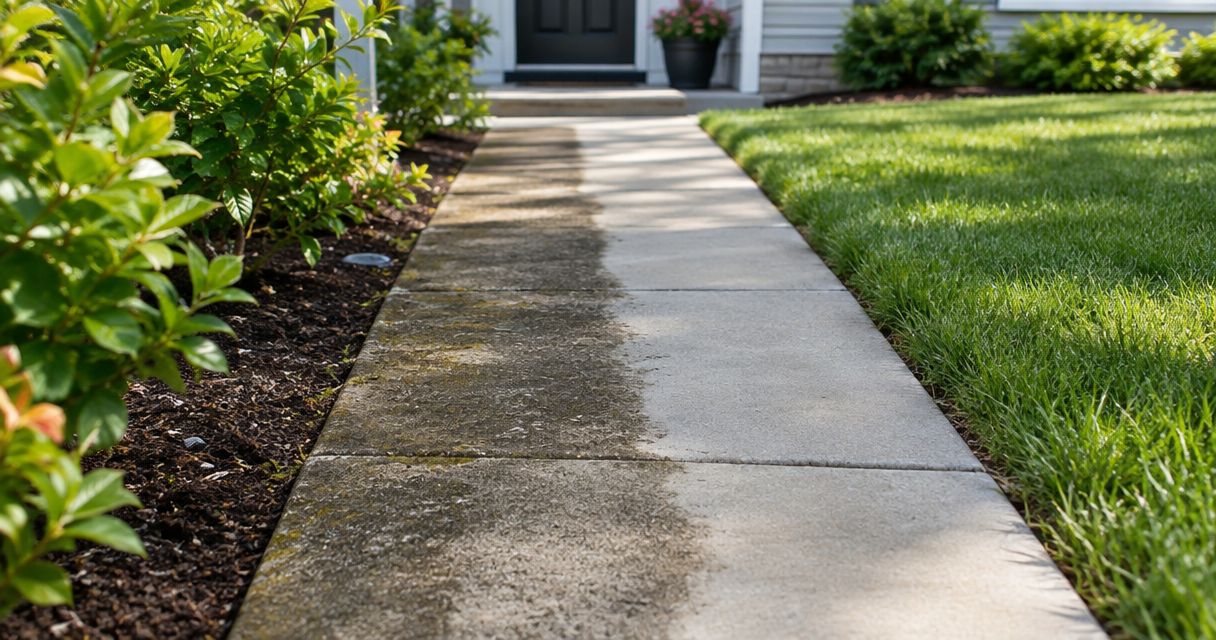
5. Streaks after washing: best for recognizing an unresolved problem
Persistent bands or patches after washing can reveal differences in the coating that dirt previously concealed. Chalking can also contribute to an uneven appearance when loose surface material is disturbed. Streaks alone, however, do not establish the cause.
Cleaning technique, runoff and remaining contamination can also leave visible patterns. Note whether the streaks existed beforehand and whether the appearance changes after the wall dries. Do not repeatedly wash a questionable area just to see whether stronger pressure fixes it.
Useful information to share:
- When the streaks first became visible.
- Whether they follow runoff paths or cleaning passes.
- Whether powder, peeling or fading appears beside them.
Limits to remember:
- A photograph does not reveal every coating problem.
- Another cleaning attempt is not automatically the right correction.
For a 2026 cleaning inquiry, include any known history of recent washing. Be factual about what happened without assuming either paint failure or a cleaning error.
Next move: Stop repeated attempts and ask for the finish to be assessed before more work.
How the signs are ranked
Chalky residue ranks first because it provides physical evidence of loose surface material. Fading, lost sheen and patchiness are less specific visual clues. Streaks rank last because several different conditions can produce them.
Use the list to improve your questions, not to make a paint diagnosis. A change in appearance is a reason to investigate, not permission to apply more pressure.
Should you book cleaning or discuss repainting first?
Book a cleaning conversation when your main concern is dirt or surface growth on an otherwise intact exterior. Disclose chalking, peeling, cracking and previous damage before agreeing on the work. Those details affect whether cleaning is appropriate and what expectations are reasonable.
Discuss coating condition with a qualified painting professional when paint is peeling, material is exposed or repainting is already planned. Cleaning and painting are different scopes. Neither a brighter wall nor a cleaner driveway proves that deteriorated paint has been restored.
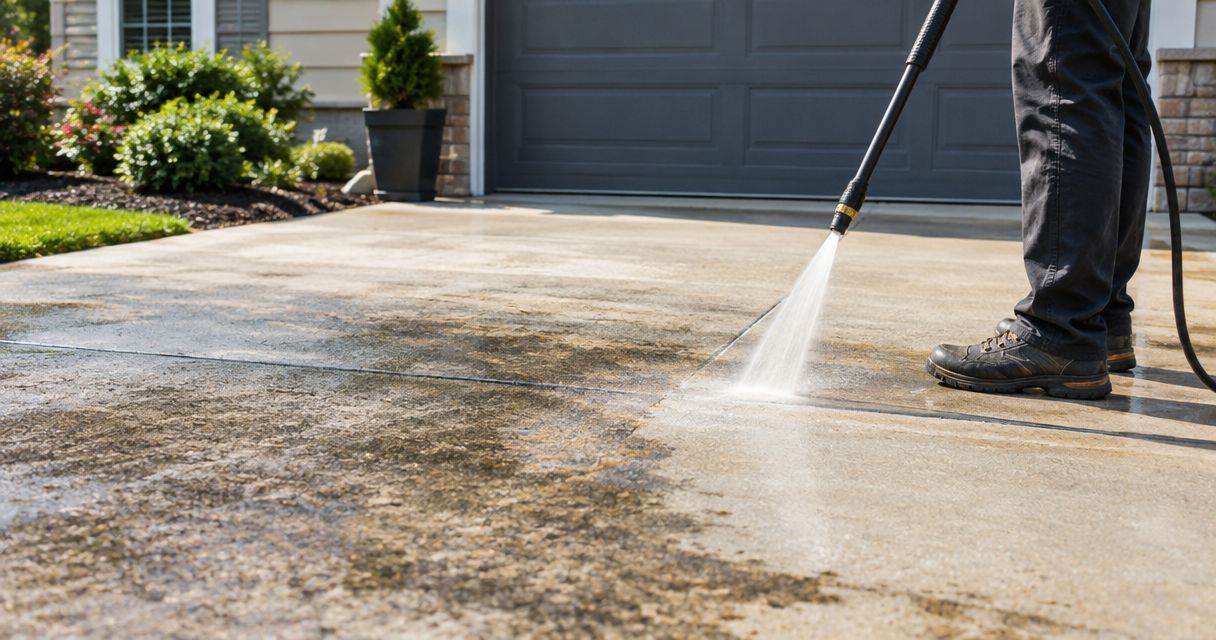
E&S Pressure Washing is best for owners seeking house washing and driveway cleaning, not paint restoration. Describe both needs if your walls and hard surfaces require attention, but keep the painted exterior separate from the concrete in the quote request.
That applies equally to homes in Callahan, residential properties throughout Nassau County and businesses across greater Jacksonville. Commercial concrete/property cleaning should identify entrances, walkways and customer access separately from any questionable painted finish.
Prepare a useful quote request
Give the contractor a clear view of the condition without trying to clean away the evidence first. For each affected wall, start with 2 photos: 1 wide view and 1 close-up. Add another image if a sheltered comparison area makes the difference clearer.
Include these details:
- Property location: State Callahan, the relevant Nassau County community or your greater Jacksonville address.
- Affected surfaces: Identify painted siding, trim, driveway, walkways or other concrete separately.
- Visible concerns: Describe powder, fading, dullness, patchiness or streaking.
- Known condition: Mention peeling, cracks, repairs and recent washing or painting.
- Requested scope: Say whether you want house washing, driveway cleaning or commercial property cleaning considered.
- Access needs: Identify gates, parked vehicles, shared entrances and customer routes.
Ask what the proposed cleaning includes, what it excludes and how questionable paint will be handled before work begins. Do not assume oxidation treatment or paint preparation is included in a standard house-washing request.
For your 2026 maintenance plan, keep the photos with the written scope. Request a quote from E&S Pressure Washing and ask whether the painted areas need further assessment before cleaning. There is no need to diagnose the finish yourself.
Request an exterior cleaning quote
Share the affected surfaces, paint concerns and any driveway or commercial concrete cleaning needs.
FAQ
What's the clearest sign of oxidation on exterior house paint?
Chalky, paint-colored residue is the clearest sign on this checklist. Fading and dullness support a weathering concern, but appearance alone does not confirm the cause.
Is faded paint always a sign of oxidation?
No, faded-looking paint does not by itself confirm oxidation or chalking. Lighting, dirt, moisture and previous repairs can also change how a wall looks.
Can pressure washing restore oxidized exterior paint?
Pressure washing does not rebuild deteriorated paint binders or restore lost pigment. Cleaning and coating restoration are different tasks, so disclose chalking before agreeing on a cleaning scope.
Should I rub the paint to check for chalking?
A gentle wipe with a clean, dry cloth on an accessible, intact area can reveal loose residue. Avoid scraping, hard rubbing or testing peeling paint and damaged surfaces.
Does chalky paint mean my house needs repainting immediately?
Chalky paint alone does not establish an immediate repainting deadline. A painting professional can assess the remaining coating, adhesion and preparation needs, especially where peeling or exposed material is present.
Can I request house washing and driveway cleaning together?
You can include both in a quote request to E&S Pressure Washing. Identify the painted exterior and concrete separately, and ask which areas are suitable for the proposed cleaning.
What should a commercial property manager report before exterior cleaning?
Report chalking, peeling, damaged surfaces, previous repairs and access constraints before exterior cleaning. List painted walls, entrance concrete and walkways separately so the requested scope is clear.
One last thing
A cleaner wall can make uneven paint more noticeable rather than less. Removing dirt does not mean the coating underneath has a uniform color or condition.
Before booking, choose your actual goal: remove buildup, prepare for a painting assessment or clean the driveway and commercial concrete while painted areas receive separate attention. That distinction gives you a clearer quote and a more realistic expectation.