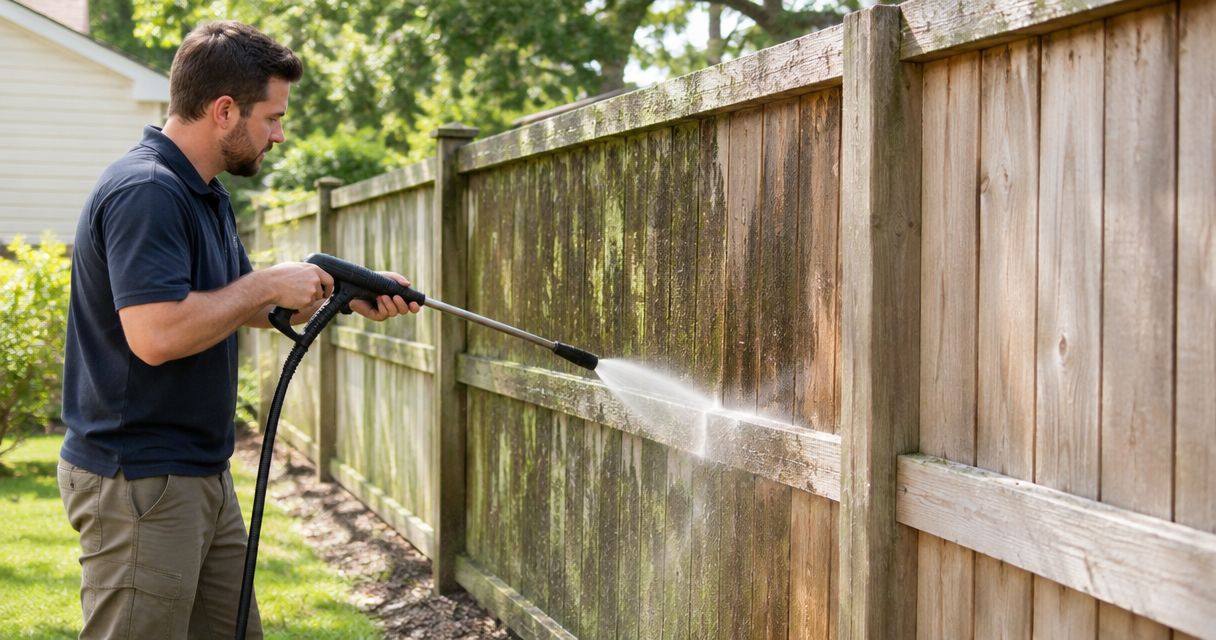
The clearest signs your fence needs cleaning are green growth, dark surface buildup, persistent dirt, uneven discoloration, and debris trapped around rails or posts. This 2026 guide helps homeowners and commercial property decision-makers in Callahan, Nassau County, and greater Jacksonville decide when to request professional cleaning—and when to ask about repairs first.
- Signs your fence needs cleaning include green growth, dark buildup, stubborn dirt, uneven discoloration, and trapped debris.
- E&S Pressure Washing is best for local owners seeking professional fence cleaning alongside house washing or driveway cleaning.
- Loose boards, soft wood, and peeling finishes need assessment before cleaning—not stronger pressure.
- Send fence photos, material details, and access information when requesting a quote.
For local fence cleaning, E&S Pressure Washing serves residential and commercial properties and is locally owned, licensed & insured, and 5-star rated. Ask for an assessment of the surface and visible buildup rather than assuming every mark will wash away.
Why this matters
A dirty fence and a damaged fence can look similar from across the yard. Green patches suggest surface growth, while gray wood can reflect weathering; neither appearance alone tells you which cleaning method is appropriate.
For your 2026 property-maintenance plan, separate appearance concerns from structural concerns. Cleaning addresses surface contamination, not loose posts, split boards, corrosion, or failed coatings.
That distinction matters whether you own a Callahan home, oversee a Nassau County rental, or manage a commercial property in greater Jacksonville. The right next move is a clear assessment, not a request for maximum pressure. The guidance below describes general cleaning considerations, not a statement of the company's specific methods.
What makes a useful fence-cleaning assessment?
Judge the need for cleaning against these criteria before choosing your next step:
- Fence material: Wood, vinyl, metal, and coated surfaces need different considerations.
- Type of buildup: Dirt, surface growth, rust, and coating failure are not interchangeable problems.
- Surface condition: Loose components, softness, cracks, and peeling finishes change the decision.
- Location: Shaded sections, ground-level rails, and areas near vegetation deserve closer inspection.
- Scope: Identify whether the concern affects a small section, one face, or the whole fence.
Fence-cleaning signs at a glance
The signs below are ordered as a practical inspection route, not a ranking of damage severity. More than one can appear on the same fence.
| Sign | Best for identifying | What to look for | Key limitation | Next move |
|---|---|---|---|---|
| Green patches | Possible surface growth | Green film on shaded panels or rails | Color alone does not identify the organism | Request a cleaning assessment |
| Dark buildup | Broad surface staining | Dark streaks or patches across the surface | Dark marks can have different causes | Photograph the pattern |
| Persistent dirt | Soil and splash deposits | Mud along lower sections or dusty faces | Cleaning does not fix the source of repeated splashing | Include nearby conditions in the quote |
| Uneven discoloration | Differences between sections | Contrasting panels or faces | Weathering and finish failure are not ordinary dirt | Ask what cleaning can realistically change |
| Trapped debris | Hidden maintenance concerns | Leaves and soil around rails or posts | Debris can conceal damage | Request inspection before cleaning |
1. Green patches: best for spotting possible surface growth
Green film on fence panels, rails, or posts is a reason to request a closer look. Check shaded areas and sections close to shrubs, but do not identify the substance solely by its color.
Best for: Owners seeing spreading green patches rather than isolated splashes of soil.
Look at the surface without scraping or disturbing a damaged finish. Note whether the green material covers a broad face, follows the lower edge, or appears only behind vegetation. Those details give a contractor more useful information than describing the fence as simply dirty.
Why professional assessment helps:
- It puts the fence material and condition ahead of pressure selection.
- It lets you discuss surrounding plants and restricted access.
- It creates an opportunity to separate removable buildup from underlying discoloration.
Limits to understand:
- Green color alone does not confirm a particular growth.
- Cleaning does not guarantee that buildup will never return.
If boards are soft, loose, or splitting, include that information before requesting cleaning. Verdict: Request a quote for green surface buildup, but flag damage first.
2. Dark buildup: best for identifying widespread surface staining
Dark streaks or broad dark patches can make a fence look neglected even when its components remain intact. The important question is whether the mark sits on the surface or reflects a change in the material or finish.
Best for: Owners noticing darkening across multiple panels or a concentrated band along rails.
Photograph the entire affected section and then take a close-up. Include nearby metal fittings, overhanging branches, or other visible features without assuming they caused the stain. A photograph records the pattern; it does not establish a diagnosis.
Why professional assessment helps:
- It gives you a chance to discuss different stain types before work starts.
- It helps define which panels and faces belong in the requested scope.
- It supports a realistic conversation about appearance rather than complete restoration.
Limits to understand:
- Dark marks are not all the same substance.
- Some discoloration remains after surface cleaning.
Tell the contractor if the fence has been painted, stained, or previously treated, when you know that history. Verdict: Ask what the dark marks represent before agreeing on the cleaning scope.
3. Persistent dirt: best for spotting soil and splash deposits
Visible mud, dust, or soil deposits are straightforward signs that a fence needs cleaning attention. Lower boards and panels beside driveways, planting beds, or exposed soil are useful places to inspect.
Best for: Homeowners and property managers whose fence looks dirty after nearby grounds work or repeated soil splashing.
Describe where the deposits occur and whether the same issue affects neighboring concrete or exterior walls. If the driveway and house also need attention, ask E&S Pressure Washing to quote fence cleaning alongside house washing and driveway cleaning as clearly separated tasks.
Why professional assessment helps:
- It identifies the full area you want cleaned rather than one visible patch.
- It allows access, landscaping, and nearby surfaces to be discussed together.
- It helps you compare a fence-only scope with a broader exterior-cleaning scope.
Limits to understand:
- Cleaning does not correct drainage or exposed-soil problems.
- Combining services does not establish a discount or a particular schedule.
For commercial properties, identify adjacent pedestrian routes and entrances when describing the work. Verdict: Request cleaning for persistent deposits and address recurring soil sources separately.
4. Uneven discoloration: best for deciding whether cleaning is enough
A fence with alternating light and dark sections deserves assessment before you treat every color difference as dirt. Wood weathering, replacement boards, coatings, and surface buildup can produce different appearances.
Best for: Owners deciding whether to clean a fence, prepare for refinishing, or investigate deterioration.
Compare panels in similar light. A shaded face and a sunlit face are not a useful before-and-after comparison. If you plan to repaint or stain, explain that goal when requesting an assessment and follow the coating manufacturer's preparation requirements.
Why professional assessment helps:
- It separates the goal of cleaning from the goal of refinishing.
- It lets you identify mixed materials or replacement sections.
- It creates space to discuss uneven results before work begins.
Limits to understand:
- Cleaning does not make different boards identical.
- Peeling coatings and weathered material need more than an assumption about dirt.
Do not use stronger pressure as a substitute for identifying the surface problem. Verdict: Hold off on promising a uniform finish; ask what cleaning alone can change.
5. Trapped debris: best for finding overlooked maintenance areas
Leaves, soil, and plant material collect where fence rails, posts, and nearby landscaping meet. These areas deserve attention because the visible debris can hide the surface beneath it.
Best for: Owners inspecting fence lines behind planting beds, beside storage areas, or around commercial boundaries.
Walk the accessible fence line and identify sections blocked by shrubs, stored items, or accumulated material. Do not pull on loose components or enter an unsafe area to obtain a photograph.
Why professional assessment helps:
- It brings hidden or obstructed sections into the requested scope.
- It identifies access questions before a visit.
- It keeps cleaning separate from repair and vegetation-management decisions.
Limits to understand:
- Debris removal does not repair a deteriorated post or rail.
- Do not assume clearing vegetation or moving stored items is included.
Ask who handles obstructions and what must be accessible before cleaning. Verdict: Request assessment of obstructed sections; do not clean over an unresolved condition.
How these signs were prioritized
The inspection order starts with visible surface changes, then moves to deposits, color differences, and concealed areas. Each sign points to a different buyer question: what is on the fence, what cleaning can change, or what needs attention first.
No single sign proves that a fence is suitable for high pressure. Material, coating condition, and structural soundness remain part of the decision.
Prepare a useful fence-cleaning quote request
For a 2026 quote request, give E&S Pressure Washing a short description of the property and the problem. Include whether the address is in Callahan, elsewhere in Nassau County, or greater Jacksonville, and whether the work concerns a home or commercial site.
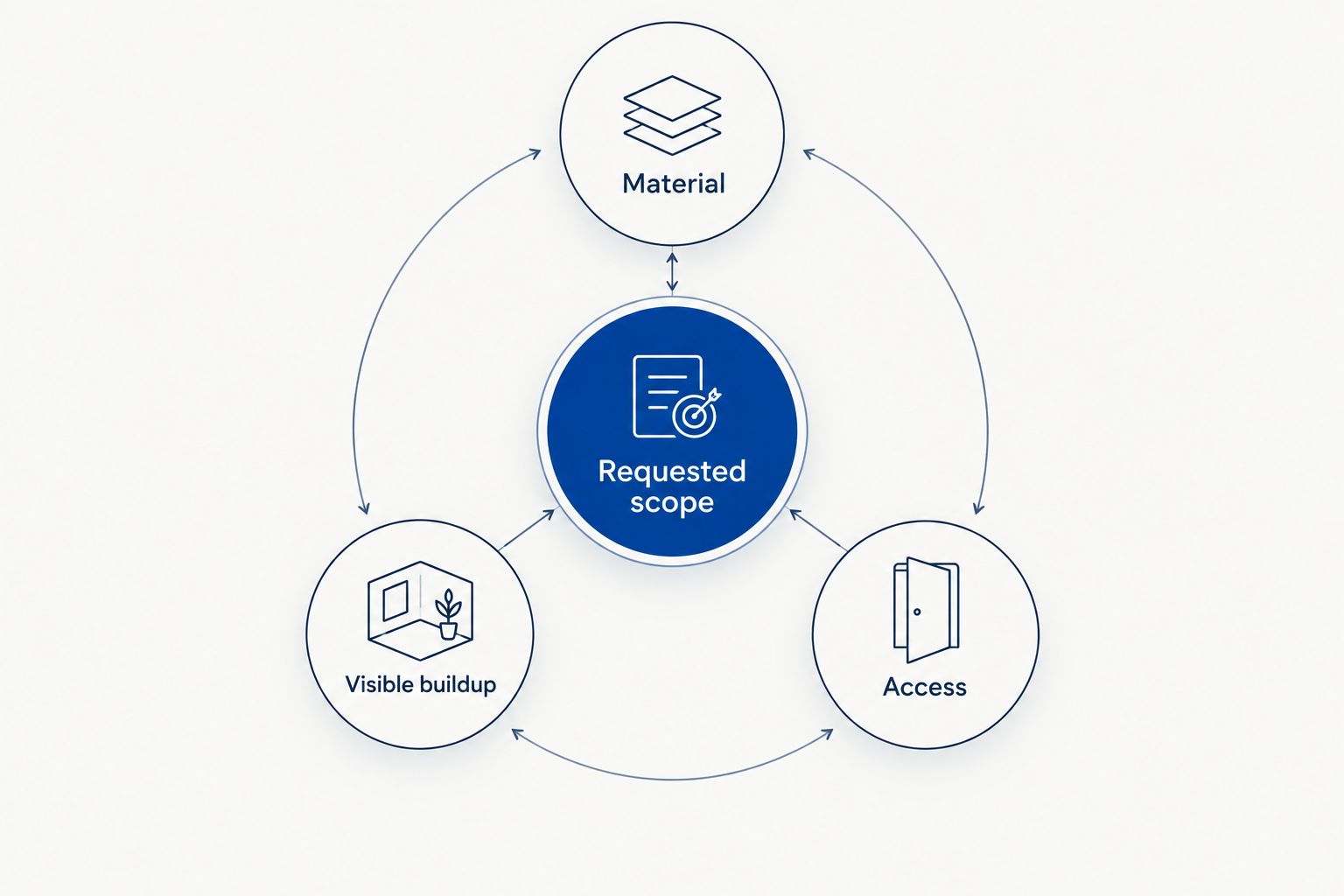
Organize the request around these details:
- Material: State wood, vinyl, metal, or unknown; identify coatings if known.
- Visible buildup: Describe green patches, dark marks, dirt, discoloration, or debris.
- Access: Mention gates, narrow passages, vegetation, pets, and occupied areas.
- Requested scope: Specify the fence faces and any house washing, driveway, or commercial concrete cleaning you want assessed.
A useful starting set is 3 photos: one wide view, one close-up, and one access view. If safe and accessible, photograph the affected section from 2 angles so the condition is not hidden by glare or shadow. These are preparation suggestions, not company submission requirements.
For commercial concrete or property cleaning, also identify entrances, pedestrian areas, and any operating constraints. Ask how those conditions affect the proposed scope; do not assume a particular work window or access arrangement.
Request a fence-cleaning quote
Describe your fence, visible buildup, access, and any house washing or concrete cleaning you want assessed.
Which next step should you choose?
Request professional cleaning assessment when surface buildup is the concern; request repair assessment when the fence itself is failing. A sound-looking fence with green film, dirt, or dark surface deposits belongs in the first conversation. Loose posts, soft wood, and peeling finishes require those conditions to be discussed first.
For your 2026 maintenance list, keep the request specific. Ask what is included, which areas need separate attention, and what appearance changes are realistic. E&S Pressure Washing provides fence cleaning alongside residential and commercial exterior-cleaning services; describe the whole property need without assuming every task uses the same method.
FAQ
What are the main signs your fence needs cleaning?
The main signs your fence needs cleaning are green patches, dark surface buildup, persistent dirt, uneven discoloration, and trapped debris. Loose boards, soft wood, or peeling finishes call for assessment before cleaning.
Does a green fence always mean mold?
No, green color alone does not identify mold. Photograph the affected surface and ask for an assessment rather than naming the growth from appearance alone.
Can pressure washing damage a fence?
Yes, unsuitable pressure or technique can damage fence materials and finishes. The cleaning approach needs to account for the material, coating, and existing condition.
Should I clean a gray wood fence or replace it?
Gray color alone is not enough to decide between cleaning and replacement. Check for loose components, softness, splitting, and other damage, then ask what cleaning can realistically change.
Can I request fence cleaning with house washing and driveway cleaning?
Yes, you can ask E&S Pressure Washing to assess fence cleaning alongside house washing and driveway cleaning. Request a clearly defined scope without assuming a combined-service discount or schedule.
What should I send for a fence-cleaning quote in 2026?
Send the location, fence material if known, photos of the buildup, and access details. Identify the faces you want assessed and any nearby areas included in your request.
How often should a fence be professionally cleaned?
Base the decision on visible buildup and surface condition rather than a fixed cleaning interval. Inspect accessible sections and request advice when staining, deposits, or debris become apparent.
One last thing
Photograph both faces of the fence when you can do so safely and with permission. A clean street-facing side does not describe the shaded side behind shrubs. That extra context makes your 2026 quote request more useful than asking for a fence wash without identifying the affected areas.