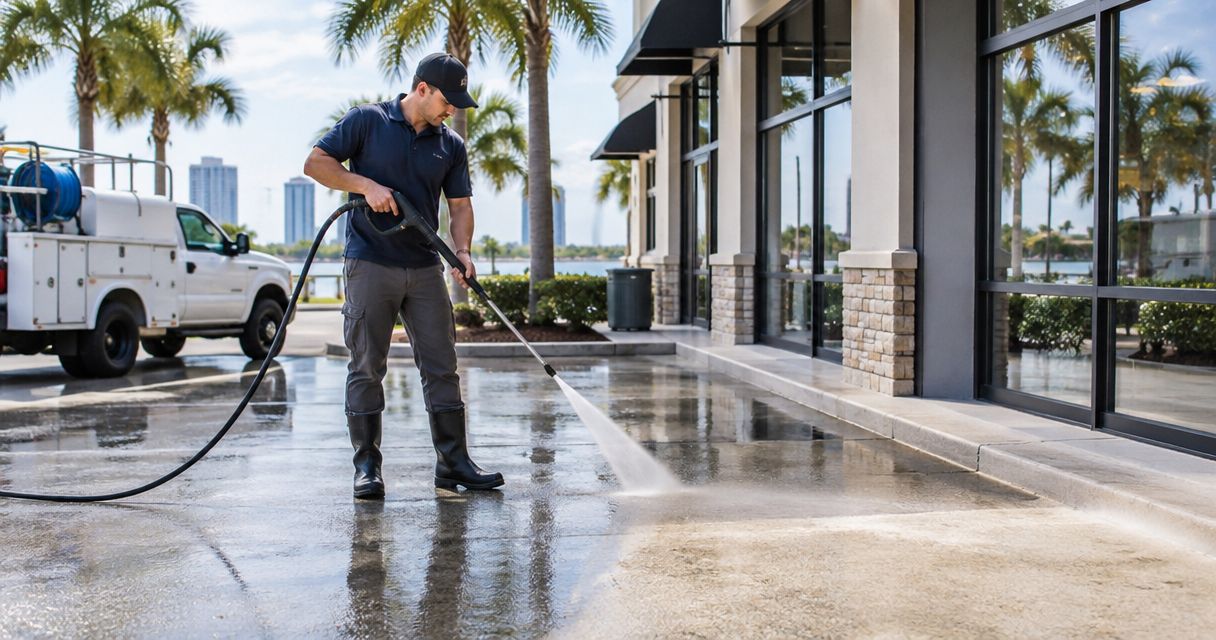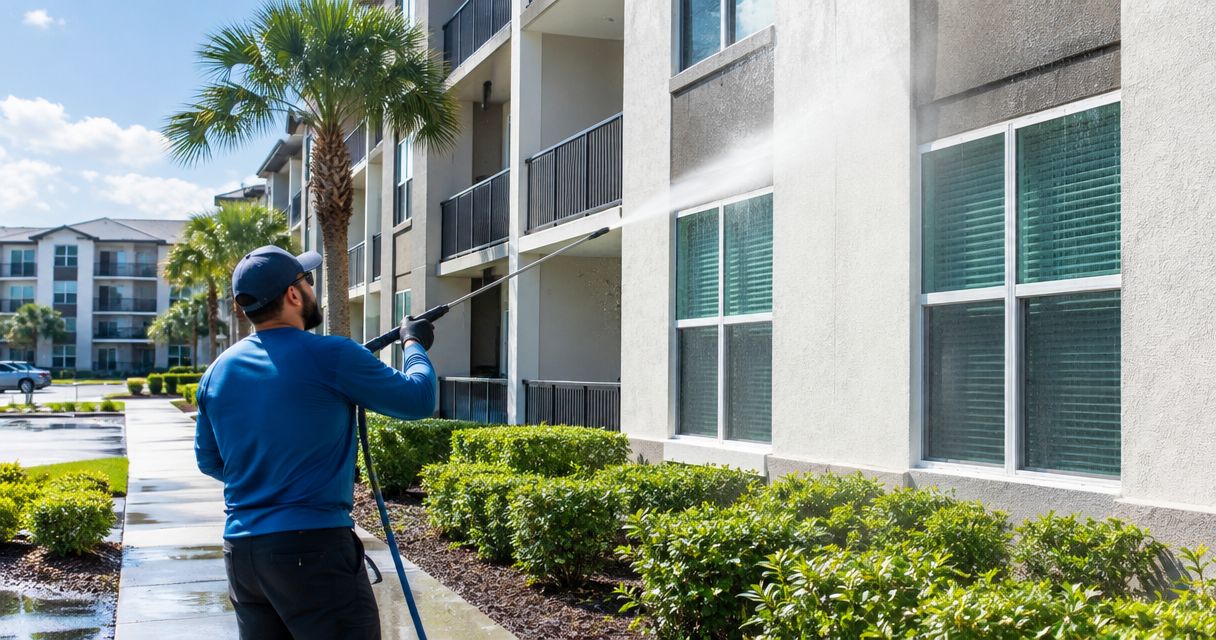
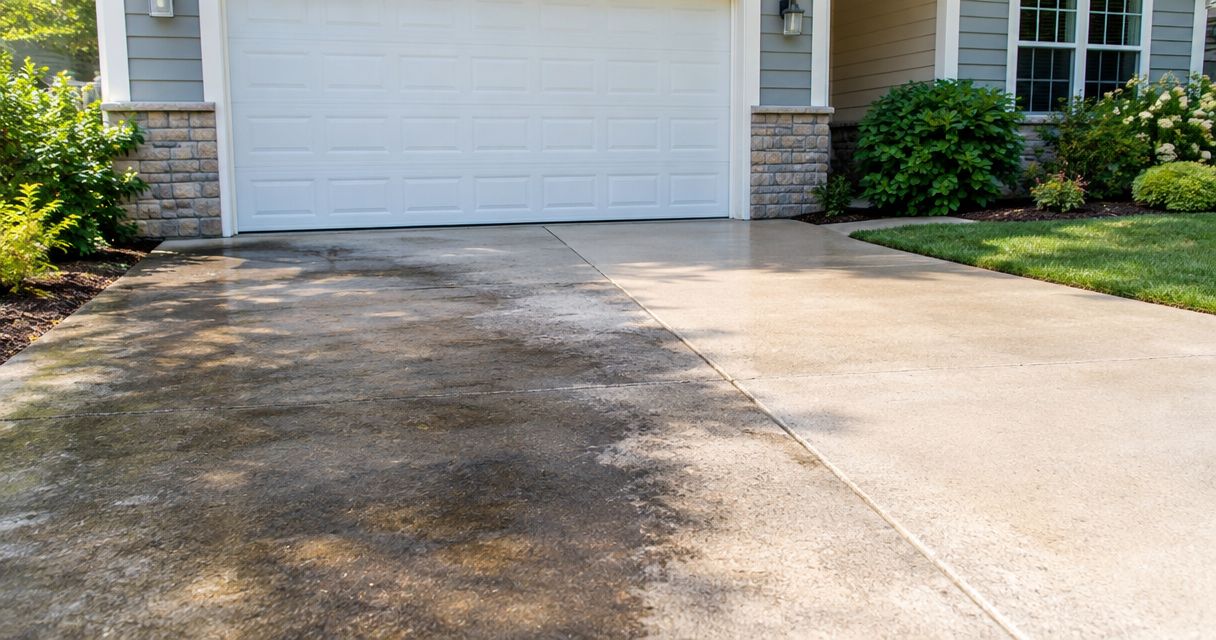
The clearest signs your driveway needs cleaning are slippery growth, spreading discoloration, persistent stains, tracked-in dirt, uneven cleaning marks, and buildup along heavily used routes. Use this 2026 checklist to decide whether to request professional cleaning, combine it with house washing, or have surface damage assessed first.
- Slippery growth and dirty walking routes deserve attention before appearance-only concerns.
- The signs your driveway needs cleaning do not prove that every stain is removable.
- E&S Pressure Washing serves homeowners and businesses in Callahan, Nassau County, and greater Jacksonville.
- Request driveway cleaning services with photos, surface details, and clearly identified areas.
Why this matters
A driveway can look dirty for different reasons. Surface buildup, a spill, worn concrete, and damaged coatings do not call for the same response, so the first decision is not simply whether to apply more pressure.
E&S Pressure Washing is a fit for homeowners and businesses seeking driveway cleaning in Callahan, Nassau County, and greater Jacksonville. The business is locally owned, licensed & insured, and 5-star rated. You can request a quote through E&S Pressure Washing after identifying the surfaces and concerns you want assessed.
For your 2026 property-maintenance list, separate cleaning concerns from repair concerns. Cleaning addresses buildup; it does not repair cracks, restore missing concrete, or guarantee the removal of permanent discoloration.
What makes a driveway cleaning concern worth acting on?
Use these criteria before deciding which sign matters most:
- Footing: Give slippery walking areas priority over cosmetic marks.
- Persistence: Distinguish loose debris from discoloration that remains after ordinary sweeping.
- Spread: Note whether the issue affects a small spot or a larger connected area.
- Surface condition: Flag cracks, flaking, exposed aggregate, coatings, and previous damage.
- Property use: Identify routes used by residents, customers, tenants, or delivery workers.
- Scope: Decide whether the driveway alone needs attention or the house and other concrete areas belong in the request.
A dark patch alone does not establish its cause. Describe what you can see and where it occurs rather than naming a treatment before anyone assesses the surface.
The six signs at a glance
The order below puts footing and widespread buildup ahead of appearance-only concerns. It is a decision guide, not a claim that every driveway needs the same service.
| Sign | Best for identifying | Recommended next move | Key limitation |
|---|---|---|---|
| Slippery growth | A walking-area concern | Request assessment of the affected route | Cleaning does not correct drainage or uneven concrete |
| Spreading discoloration | Broad surface buildup | Photograph affected and less-affected areas | Color alone does not identify the cause |
| Persistent stains | Localized marks needing assessment | Identify known spills and request realistic expectations | Some stains remain after cleaning |
| Tracked-in dirt | Buildup affecting entrances | Include the driveway-to-door route in your request | Other areas can also contribute dirt |
| Uneven cleaning marks | A patchy previous cleaning attempt | Disclose the earlier work before further cleaning | Marks can reflect surface damage rather than dirt |
| Buildup on busy routes | A wider property-cleaning need | Define connected concrete areas and access needs | Cleaning is not a substitute for repairs |
1. Slippery growth: prioritize the walking route
Best for: deciding which area deserves attention first.
Green or dark growth along a shaded driveway edge deserves attention when the surface also feels slippery. Focus on the route people actually use between vehicles, doors, gates, and shared entrances.
Do not walk onto a questionable area just to test it. Report where slipping has occurred or where footing already feels uncertain, and keep people away from an obvious hazard while arranging assessment.
Why professional assessment helps: You can point out both the buildup and the surrounding conditions, including shade, standing water, and nearby landscaping. That gives the contractor a clearer problem to assess than a general request to clean the driveway.
Limitation: Cleaning does not fix a low spot, drainage defect, or uneven slab. If water repeatedly collects there, treat that as a separate maintenance question.
Verdict: Request assessment promptly when buildup affects footing. Do not wait for the whole driveway to look dirty.
2. Spreading discoloration: look beyond one dark patch
Best for: recognizing when spot cleaning no longer matches the scope.
A broad darkened area that remains after loose leaves and debris are removed is a reason to discuss driveway cleaning. Compare the main traffic area with a less-used edge, but do not assume the cleaner-looking section represents a guaranteed final result.
Take a wide photo showing the driveway as a whole. A close-up alone can make a small patch appear to be the entire problem and hide changes in material or surface condition.
Why professional assessment helps: You can request a defined cleaning area rather than a collection of disconnected spots. That also creates an opportunity to discuss the adjoining walkway or entrance without assuming those areas are included.
Limitation: Weathering, previous repairs, and differences in concrete can create color variation that cleaning does not remove. Uniform color is not the same thing as a clean surface.
Verdict: Request a driveway-wide assessment when discoloration is widespread. Ask what variation is likely to remain.
3. Persistent stains: ask about expectations before treatment
Best for: deciding whether a localized mark needs specialist attention.
A stain that remains after ordinary sweeping is different from loose dirt. Oil, rust-colored marks, and other spills require assessment of both the mark and the surface beneath it; appearance alone does not establish the exact cause.
Tell the contractor what caused the stain if you know. If you do not know, describe its location and appearance without guessing, and mention any cleaning products or previous attempts already used.
Why professional assessment helps: You can ask whether the proposed work targets general buildup, the individual stain, or both. Those are different expectations and should be clear before you approve work.
Limitation: Some discoloration is permanent, and an unknown stain does not come with a guaranteed removal outcome. More pressure is not automatically the answer.
Before authorizing another attempt, read whether driveway cleaning can damage concrete.
Verdict: Request an assessment, not a stain-removal promise. Keep repair questions separate from cleaning questions.
4. Tracked-in dirt: follow the route to the entrance
Best for: connecting driveway buildup with everyday property use.
If shoes or vehicle tires repeatedly carry visible dirt from the driveway toward the entrance, inspect the connected route. Look at the parking area, walkway, doorstep, and nearby bare ground rather than assuming the driveway is the only source.
This matters for a Callahan home, a Nassau County rental property, or a Jacksonville business entrance. In each case, describe where the dirt starts and where people carry it.
Why professional assessment helps: You can define connected cleaning areas in a single request. A driveway-only scope can leave an adjoining dirty walkway outside the job.
Limitation: Cleaning the concrete will not stop soil washing from an adjacent bed or repair a deteriorating surface. Those sources require separate attention.
Verdict: Include the driveway-to-door route in the assessment. Do not assume every adjoining surface is covered by the same quote.
5. Uneven cleaning marks: stop before repeating the attempt
Best for: recognizing when another cleaning attempt needs assessment first.
Stripes, isolated bright patches, or overlapping patterns after previous washing are reasons to pause. The surface might have unevenly removed buildup, but visible differences can also involve wear or damage.
Explain what was cleaned, which areas were treated, and whether the marks appeared immediately afterward. Do not attempt to blend the entire driveway by repeatedly treating the darker sections.
Why professional assessment helps: The contractor can consider the previous work alongside the current condition. Clear disclosure is more useful than describing every remaining mark as dirt.
Limitation: Cleaning cannot restore material already removed from the surface. A cleaning quote should not be treated as a repair proposal.
Verdict: Hold further cleaning until the marks are assessed. If the surface is flaking or visibly damaged, ask about repair assessment before proceeding.
6. Buildup on busy routes: define the wider property need
Best for: planning commercial concrete and shared-access cleaning.
When buildup extends from vehicle areas into pedestrian routes, the task is broader than driveway appearance. Commercial decision-makers should identify customer entrances, tenant walkways, loading access, and other concrete areas that belong in the request.
Homeowners can apply the same principle to shared driveways and frequently used paths. Prioritize the route people need, not just the area most visible from the street.
Why professional assessment helps: A defined scope lets you discuss access restrictions, vehicle movement, and which areas need to remain usable. Ask how the proposed work will accommodate those requirements rather than assuming a particular arrangement.
Limitation: Cleaning does not correct broken concrete, poor drainage, or accessibility defects. Those issues need their own decisions.
Verdict: Request a property-level scope when connected busy areas need attention. Avoid treating each dirty patch as an unrelated job.
Prepare a quote request that answers the useful questions
For a 2026 quote request, describe the property before asking which cleaning method it needs. E&S Pressure Washing offers house washing, driveway, concrete, and fence cleaning; the requested scope should identify which of those services you want considered.
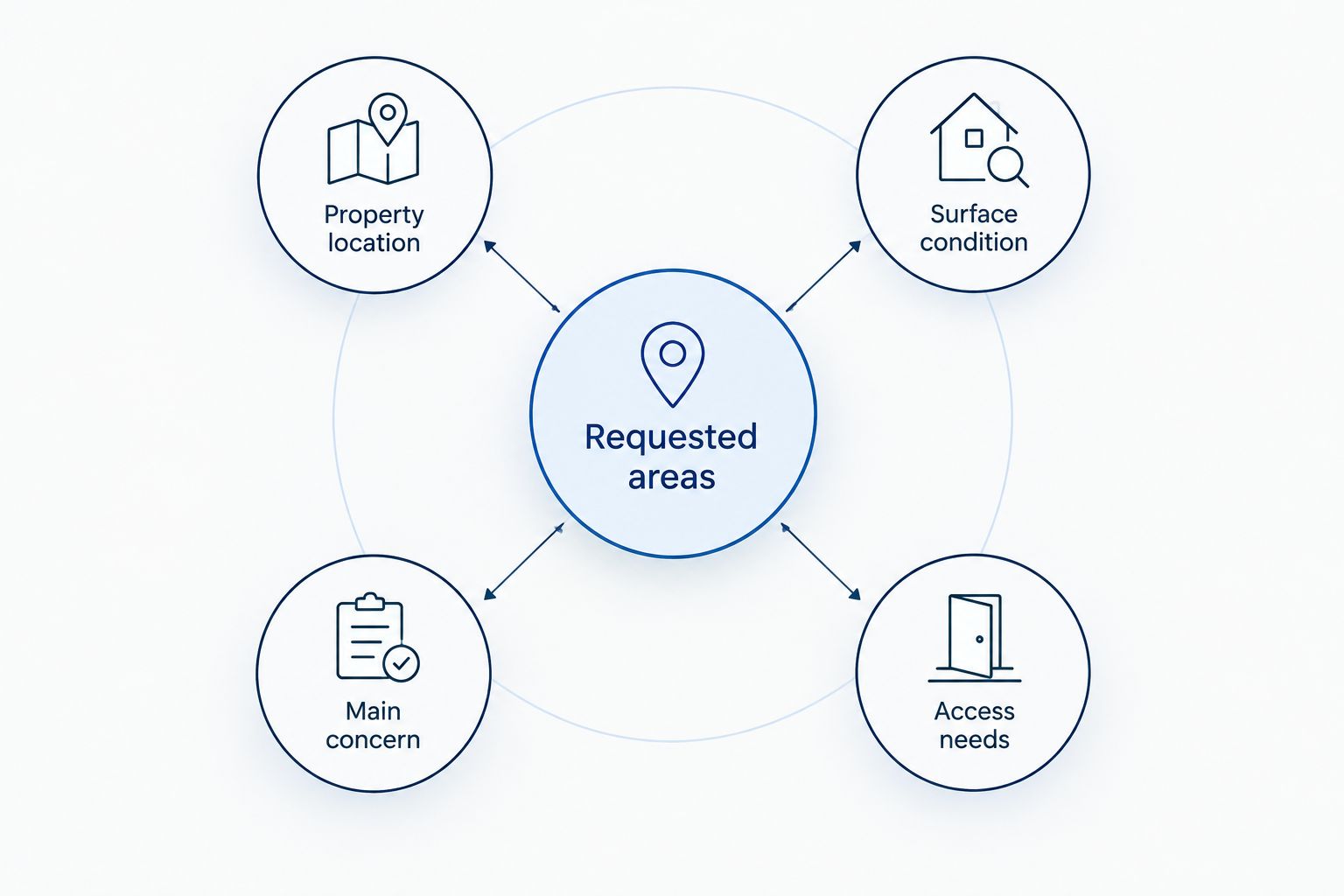
Organize your information under these headings:
- Property location: State Callahan, the relevant Nassau County location, or the greater Jacksonville address.
- Surface condition: Identify concrete, pavers, coatings, cracks, flaking, and unknown materials.
- Main concern: Describe slippery growth, discoloration, stains, tracked dirt, or previous cleaning marks.
- Access needs: Explain gates, parked vehicles, shared routes, tenant access, and business activity.
- Requested areas: Name the driveway, house exterior, walkway, or commercial concrete areas separately.
As a practical starting point, send 3 photos: one wide driveway view, one close-up of the main concern, and one view of the entrance or access route. Add more when different surfaces or damaged areas need explanation; this is preparation advice, not a stated company requirement.
For a homeowner, identify 2 areas separately if you want house washing and driveway cleaning considered together. For a commercial property, mark 1 priority route that customers or occupants depend on, then list the additional concrete areas.
Do not assume bundling guarantees a discount or that adjoining surfaces are included. Ask for a written scope that names the areas, exclusions, and expectations.
Request a cleaning quote
Describe your surfaces, concerns, and access needs in Callahan, Nassau County, or greater Jacksonville.
Which signs should you act on first?
In 2026, prioritize questionable footing and frequently used routes before appearance-only discoloration. Next, assess widespread buildup and persistent stains; pause when cracking, flaking, or previous cleaning damage is the main concern.
The ordering follows the criteria above: footing, persistence, spread, surface condition, property use, and scope. It does not diagnose your driveway from a photograph or establish that high pressure suits every surface.
If both the house exterior and driveway need attention, request both in the same conversation. If only a small cosmetic mark concerns you, ask for realistic expectations before commissioning a broader job.
FAQ
What are the main signs your driveway needs cleaning?
The main signs your driveway needs cleaning are slippery growth, spreading discoloration, persistent stains, tracked-in dirt, uneven cleaning marks, and buildup on busy routes. Surface damage requires a separate assessment rather than an assumption that cleaning will fix it.
Should I book driveway cleaning if the concrete feels slippery?
Request an assessment when buildup affects footing on a driveway or walking route. Keep people away from an obvious hazard, and identify standing water or uneven concrete as separate concerns.
Can professional driveway cleaning remove every stain?
No, professional driveway cleaning does not guarantee removal of every stain. Describe known spills and previous treatments, then ask what improvement is realistic for the surface.
Should I book house washing and driveway cleaning together?
Request both together when the house exterior and driveway each need attention. Ask for the areas to be listed separately so you understand the proposed scope and exclusions.
What should I send with a driveway cleaning quote request?
Send the property location, surface details, photos, main concerns, and access restrictions. Identify cracks, coatings, previous cleaning attempts, and any adjoining areas you want considered.
How often should I schedule driveway cleaning in 2026?
Base your 2026 cleaning decision on actual buildup, footing, surface condition, and property use rather than a universal calendar. Ask for an assessment when those conditions change.
Does E&S Pressure Washing handle commercial concrete cleaning?
E&S Pressure Washing provides commercial concrete cleaning for businesses in Callahan, Nassau County, and greater Jacksonville. Identify customer routes, access needs, and the specific concrete areas when requesting a quote.
One last thing
The darkest patch is not automatically the first area to clean. A less visible walking route with questionable footing deserves attention before an appearance-only stain near the street.
Start your request with what people use, what concerns you, and what condition the surface is in. That creates a clearer cleaning decision than asking for the strongest possible treatment.