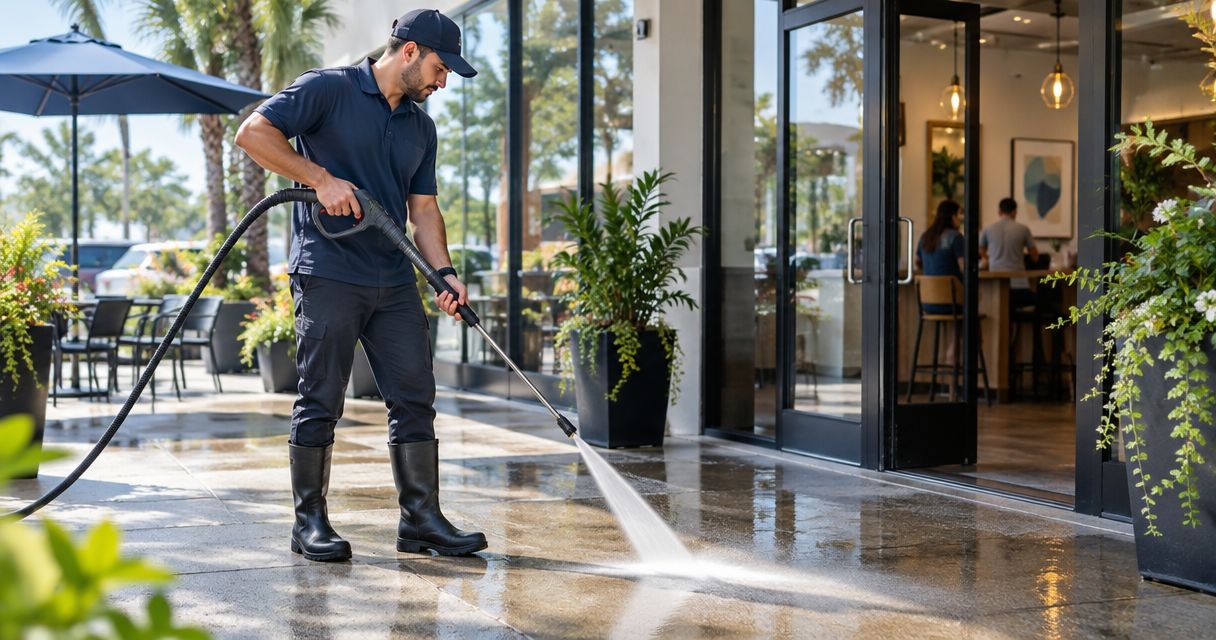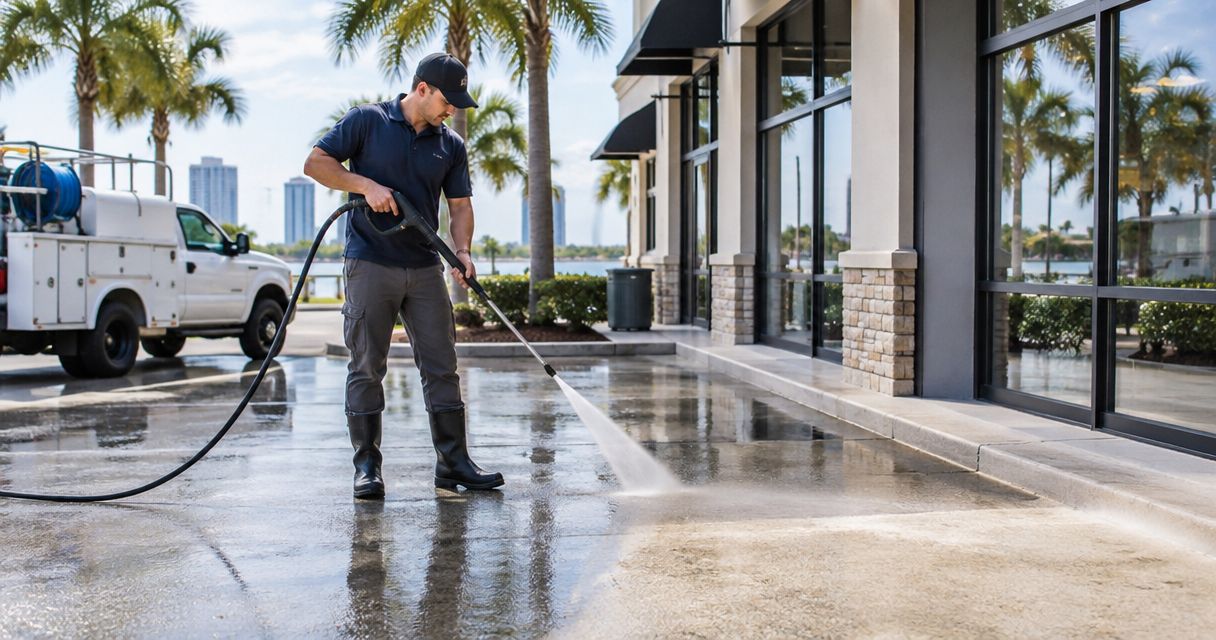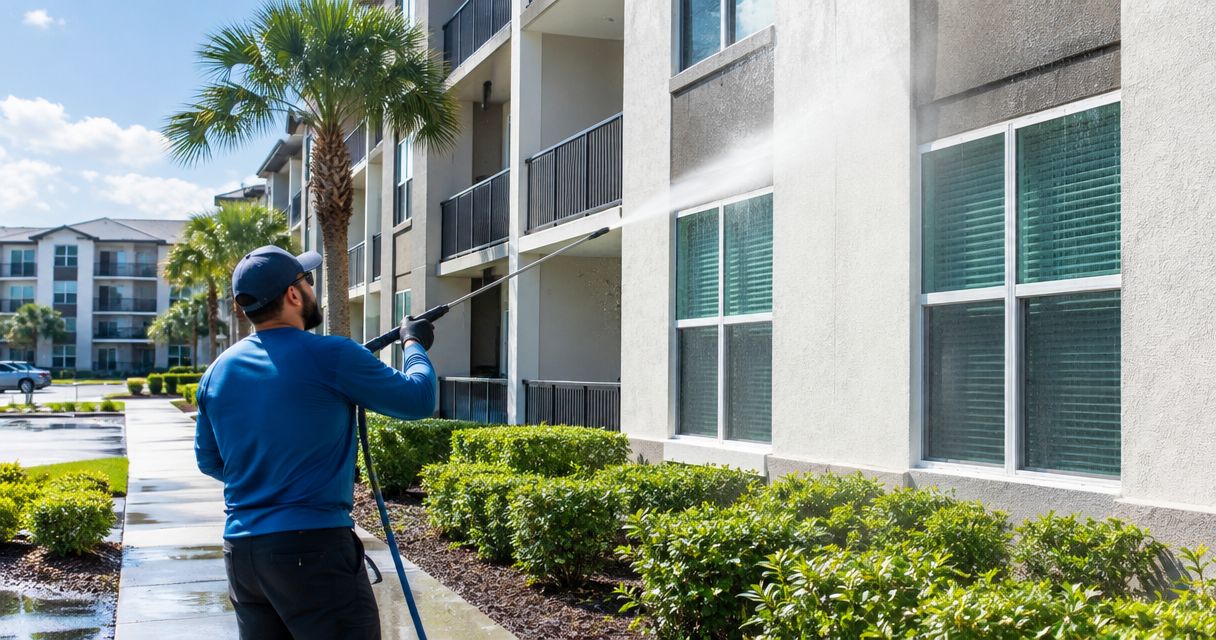
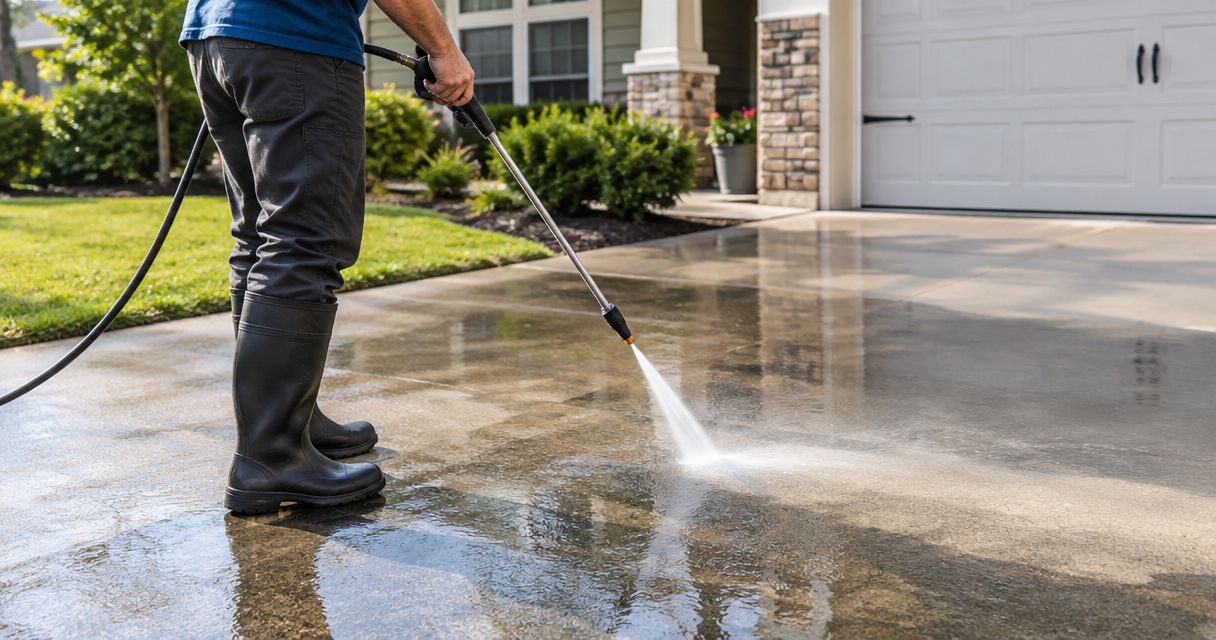
Before booking driveway cleaning services, ask where the wash water will go, what it will carry, and how the contractor will keep it away from storm drains, neighboring property, and sensitive areas. Ask whether collection or another control is needed, and have the agreed approach included in the written scope. For Nassau County owners, the key is a property-specific answer—not a blanket assurance that runoff is harmless.
- Before booking driveway cleaning services, ask where wash water will go and how nearby drains will be protected.
- E&S Pressure Washing is best for local owners seeking house washing, driveway cleaning, or commercial concrete cleaning.
- Include runoff questions when combining house washing and driveway cleaning; both areas belong in the scope.
- For commercial property cleaning, identify shared drains, pedestrian access, and who approves the work before booking.
What should Nassau County owners ask about cleaning runoff?
Ask the contractor to explain the route from the cleaning area to the proposed collection or discharge location. A runoff plan should describe your property, not just the cleaning equipment. E&S Pressure Washing provides house washing, driveway, concrete, and fence cleaning in Callahan, Nassau County, and greater Jacksonville; ask how runoff will be addressed for your particular job.
Use these questions when requesting a quote in 2026:
- Where will the water go? Identify the driveway slope, low spots, street edge, nearby drains, and adjoining properties.
- What will the water carry? Describe visible dirt, vegetation, oil marks, loose material, or residue rather than assuming everything is ordinary surface dirt.
- How will runoff be controlled? Ask whether the proposed work requires diversion, collection, drain protection, or another site-specific measure.
- Where will collected water go? If collection is proposed, ask how the contractor will determine an appropriate disposal route.
- What is included? Put the agreed work area, runoff approach, access arrangements, and exclusions in the written scope.
A clear response explains both the intended approach and its limits. Equipment names alone do not tell you where dirty water ends up.
Why this matters
Exterior cleaning moves material off a surface. That material does not disappear when the driveway looks cleaner; it can move with the wash water toward a drain, planting bed, neighboring driveway, or low area.
That makes runoff a planning question before it becomes a cleanup problem. You do not need to select equipment or prescribe a chemical mixture. You need to understand where the water is expected to travel and who is responsible for controlling it.
The same questions apply to a Callahan home, a property elsewhere in Nassau County, and a commercial site in greater Jacksonville. The address alone does not describe the drainage conditions. A flat-looking entrance and a sloping driveway can present different planning needs even on the same property.
What should you show the contractor before requesting a quote?
For a 2026 quote request, provide context rather than a close-up of the dirtiest patch. Start with 4 photo views: the full cleaning area, the downhill edge, nearby drains, and the adjoining landscaping or property boundary. Add more views when a corner, parked vehicle, or building hides the water's likely route.
These are useful starting views, not a substitute for a contractor's assessment. Do not stand in traffic, open drainage structures, or enter restricted areas to take them.
Include these details in your message:
- Work area: Identify the driveway, house exterior, sidewalk, entrance, fence, or commercial concrete you want assessed.
- Water route: Show where rainwater normally travels and where it tends to collect.
- Visible residue: Mention oil marks, loose paint, construction debris, or material you cannot identify.
- Nearby features: Point out drains, ditches, planting beds, ponds, doors, and neighboring boundaries.
- Access needs: Explain where residents, customers, deliveries, or employees need to pass.
Describe observations, not conclusions. Saying that water pools beside a garage gives the contractor more useful information than declaring the drainage safe. If you do not know where a drain leads, say so.
How do runoff questions change with the cleaning scope?
A driveway-only request and a commercial property request need different scope details. Neither job should be treated as automatically simple or automatically difficult; compare the actual surfaces, drainage routes, and access requirements.
| Cleaning scope | Best for | Main advantage | Limitation to address | Runoff question |
|---|---|---|---|---|
| Driveway cleaning | Owners focused on a driveway | Keeps the requested work area clearly defined | Water can still reach streets, drains, or neighboring areas | Where does water leave the driveway? |
| House washing with driveway cleaning | Homeowners addressing both exterior areas | Allows both areas to be discussed in one scope | Wall runoff and driveway runoff both need consideration | How will the cleaning sequence affect water movement? |
| Commercial concrete cleaning | Managers responsible for entrances, walks, or shared concrete | Connects cleaning with access planning | Shared drainage and public access add coordination | Who approves runoff controls and pedestrian arrangements? |
Choose the scope that matches the property need, then ask how that scope changes the runoff plan. A broader job is not automatically the better choice.
What should change when house washing and driveway cleaning are combined?
When you request house washing and driveway cleaning together in 2026, ask the contractor to discuss the work as a connected area. Water from walls, steps, and adjacent hard surfaces can reach the driveway or its drainage route.
The benefit is a coordinated conversation about both services. The limitation is that adding surfaces also adds details to assess: different materials, nearby plants, doorways, and places where water can collect.
Ask these questions before accepting the combined scope:
- Will water from the house-washing area travel across the driveway?
- Does the proposed cleaning sequence account for that route?
- Which surfaces are included, and which are excluded?
- Are there existing cracks, coatings, loose finishes, or drainage concerns to discuss?
- What should you move or identify before the work begins?
These are general planning questions, not a statement of E&S Pressure Washing's verified cleaning methods. Ask E&S Pressure Washing to explain the proposed approach for your property; do not assume a particular pressure level, cleaning solution, or collection method is included.
What should commercial property managers ask differently?
Commercial owners in Callahan, Nassau County, and greater Jacksonville should separate 2 access routes in the planning conversation: the route wash water takes and the route people use. Keeping an entrance usable does not answer the drainage question, and identifying a drain does not resolve pedestrian access.
Ask who has authority to approve the scope. A tenant, property manager, association, and owner can have different responsibilities; establish the correct contact instead of leaving approval until work is arranged.
For a 2026 commercial concrete-cleaning request, identify customer entrances, accessible paths, delivery areas, shared sidewalks, and neighboring units. Explain any operating restrictions that affect the proposed work. Ask the contractor what access arrangements the job requires rather than assuming cleaning can proceed around normal activity.
Where a site has shared drainage, ask who can confirm where it leads. A grate beside a loading area is not enough information to establish an appropriate destination for wash water.
Why runoff planning varies by property
The right questions depend on the site and the material being removed. These factors explain why a generic statement about driveway cleaning services cannot settle runoff handling for every address:
- Slope and low spots: Water follows the property's contours, including areas that are easy to overlook from a single photograph.
- Drain connections: A visible drain does not, by itself, establish where the water goes or whether wash water belongs there.
- Surface condition: Cracks, coatings, loose finishes, and damaged areas belong in the assessment before cleaning starts.
- Material being removed: Dirt, oil residue, loose paint, and unidentified substances should not be treated as interchangeable.
- Adjacent areas: Planting beds, neighboring property, doors, ditches, and water features affect the planning conversation.
- Scope and access: Combining services or cleaning a shared commercial area adds coordination beyond a driveway-only request.
Do not use a clean-looking surface as evidence that the runoff was handled appropriately. The finish and the water-management approach are separate parts of the job.
What should the written quote say about runoff?
Keep 1 written scope that connects the cleaning area with the agreed runoff approach. A written description gives you something specific to review when comparing proposals, without requiring you to design the contractor's work.
Use this sequence:
- Define surfaces. Name the areas included and any areas excluded.
- Identify drainage. Record the relevant drains, slopes, boundaries, or unresolved drainage questions.
- Confirm controls. Ask what runoff measures are included and whether any part needs further assessment.
- Assign responsibilities. Clarify owner preparation, access arrangements, and any approvals that must be obtained.
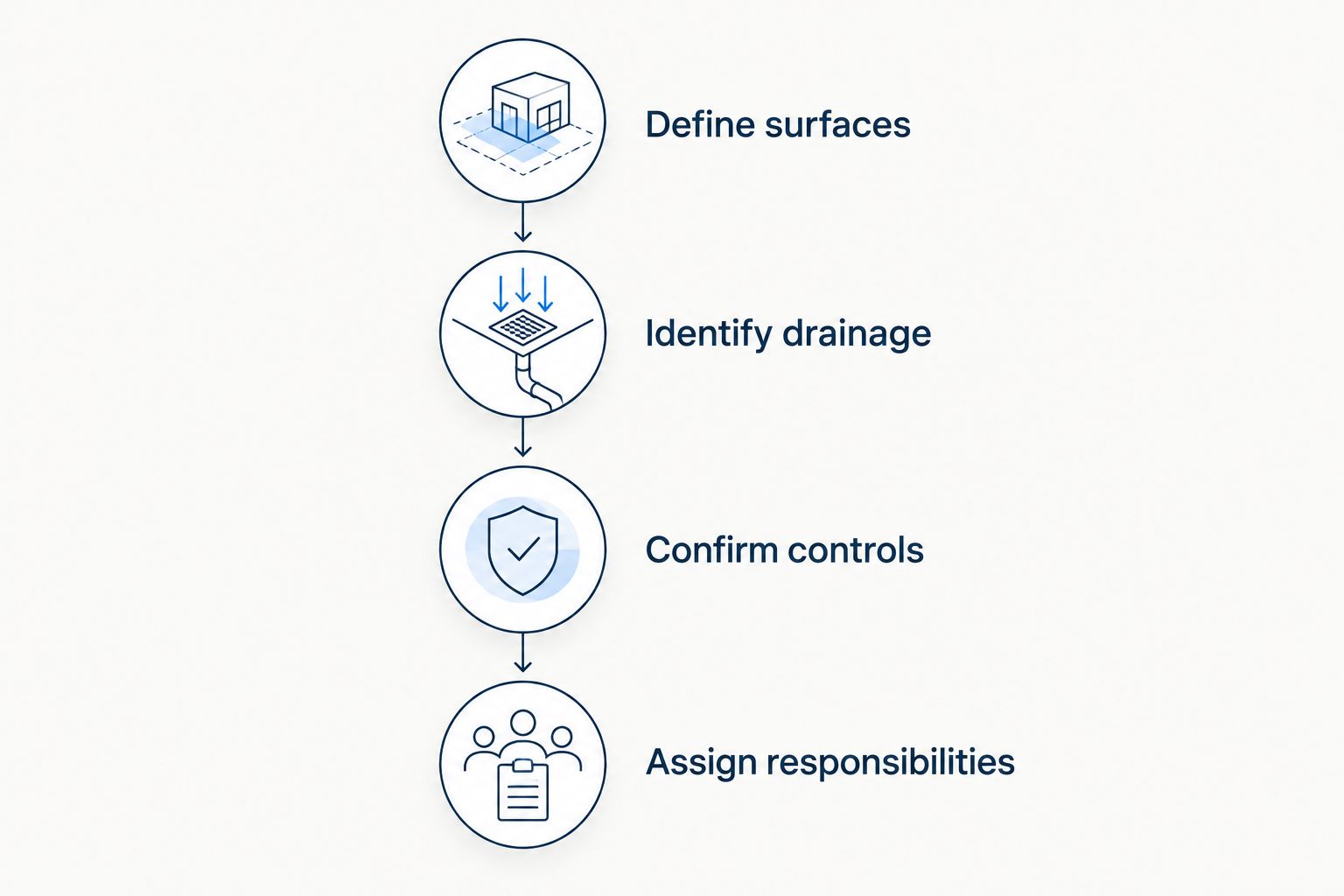
Read the quote for omissions, not just service names. If runoff handling was discussed but does not appear in the scope, ask for clarification before booking. If you need a broader checklist, review what a pressure washing quote should include in Jacksonville.
A written scope does not replace any applicable requirements. When a drainage connection or disposal route is uncertain, ask which responsible local authority or utility needs to confirm it. Do not assume Nassau County and greater Jacksonville properties all have identical arrangements.
Is biodegradable cleaner enough to answer the runoff question?
No. A biodegradable label does not establish where wash water should go. The runoff can also contain material removed from the surface, so a discussion limited to the cleaning product leaves part of the question unanswered.
Ask about both the cleaner and the resulting wash water. Avoid accepting an assurance about plants, drains, or waterways unless the contractor can explain how it applies to the proposed work.
Should every driveway-cleaning job use the same runoff controls?
No. The controls should follow the site assessment and applicable requirements. A standard explanation is useful, but it still needs to account for your driveway's slope, nearby drains, surface residue, and neighboring areas.
Ask what would cause the proposed approach to change. That question helps distinguish a property-specific plan from a fixed answer offered before the site conditions are understood.
When should you request a quote from E&S Pressure Washing?
E&S Pressure Washing is locally owned, licensed & insured, and 5-star rated. Its confirmed services include residential and commercial house washing, driveway, concrete, and fence cleaning across Callahan, Nassau County, and greater Jacksonville.
Request a quote when you can describe the surfaces and share the drainage concerns you want assessed. The service range fits owners seeking driveway cleaning, house washing with driveway cleaning, or commercial concrete cleaning; it does not establish that every surface is suitable for high pressure or every stain can be removed.
For your 2026 inquiry, send the address, requested areas, useful photos, and any access restrictions. Ask how runoff will be addressed and what the written scope will include. You can review the proposed work before deciding whether to book.
Request an exterior cleaning quote
Share your cleaning areas, drainage concerns, and access needs for a property-specific discussion.
FAQ
What should I ask driveway cleaning services about runoff?
Ask where wash water will go, what it will carry, and which controls are included. Have the agreed approach connected to the cleaning area in the written scope.
Can pressure washing water go into the nearest storm drain?
Do not assume the nearest storm drain is an appropriate destination for pressure washing water. Ask the contractor to establish the drainage route and confirm applicable requirements before work begins.
Does biodegradable cleaner make driveway runoff harmless?
No. A biodegradable cleaner does not account for dirt, oil residue, loose material, or other substances removed from the surface. Ask about the resulting wash water, not just the product.
Should I ask about runoff when booking house washing and driveway cleaning together?
Yes. Ask how water from the house-washing area will interact with the driveway and surrounding drainage. Both areas should be addressed in the proposed scope.
What photos should I send with a driveway cleaning quote request?
Start with 4 photo views: the full cleaning area, the downhill edge, nearby drains, and adjoining landscaping or property boundaries. Add views where obstructions hide the likely water route.
What should a commercial property manager confirm before concrete cleaning?
Confirm the work area, drainage route, access arrangements, and person authorized to approve the scope. Identify shared entrances, sidewalks, delivery areas, and neighboring units that affect planning.
How do I compare quotes for pressure washing in Jacksonville, FL?
Compare the included surfaces, runoff approach, access responsibilities, and exclusions—not just the service label. Ask each contractor to clarify unresolved drainage or disposal questions before you book.
One last thing
A drain close to the driveway is a reason to ask another question, not a reason to stop asking. Before booking, have the contractor point out where the water is expected to leave the cleaning area. If that answer remains unclear, resolve it before agreeing to the work.